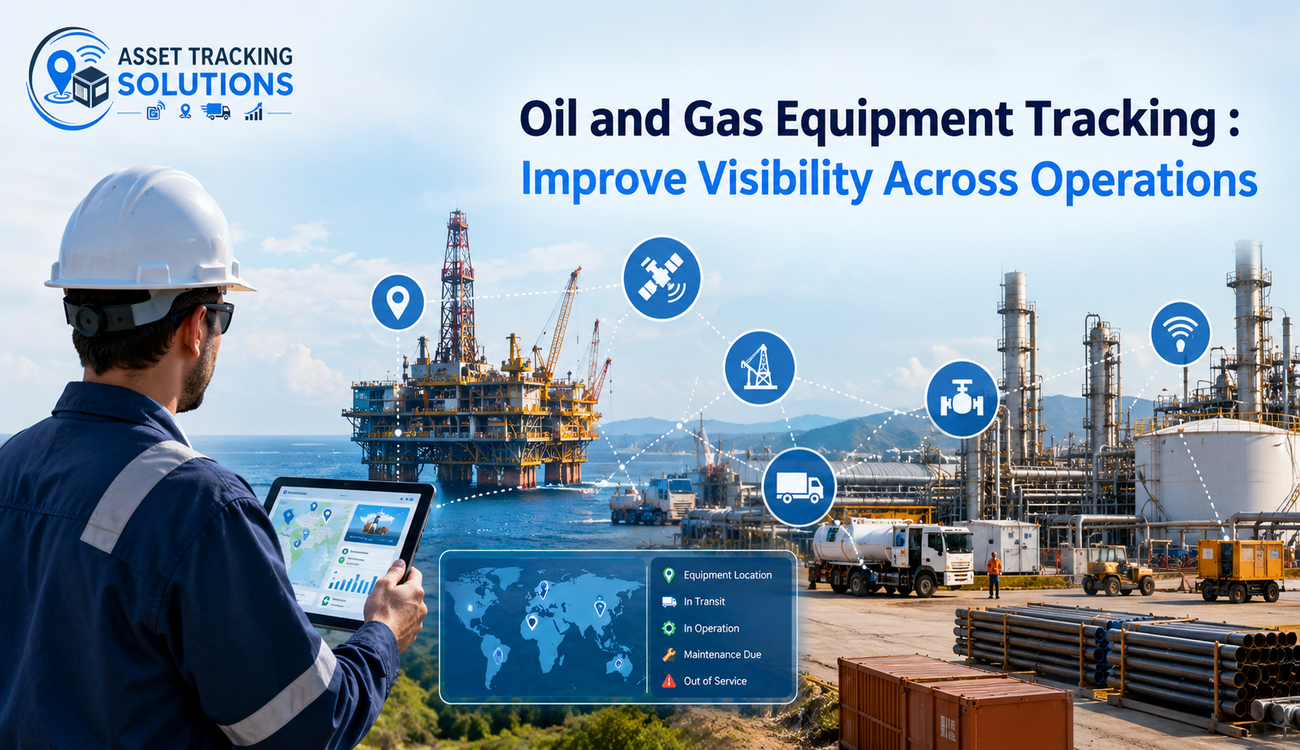
The oil and gas industry depends on a wide range of high-value equipment, tools, machinery, vehicles, and field assets to keep exploration, extraction, processing, and distribution activities running smoothly. These assets often move between drilling sites, refineries, warehouses, maintenance facilities, offshore platforms, and transportation locations. When organizations lack accurate visibility into where equipment is located, how it is being used, or when it requires maintenance, operational delays and unnecessary costs can quickly increase. Oil and Gas Equipment Tracking provides a structured approach to improving asset visibility, utilization, maintenance planning, and operational control across complex oil and gas environments.
Modern tracking technologies can connect physical equipment with centralized digital systems, allowing operations teams to monitor asset locations and status more efficiently. RFID, GPS, IoT sensors, barcode systems, mobile applications, and cloud platforms can work together to provide timely information about equipment across different operational environments. This visibility helps organizations reduce equipment losses, improve resource allocation, and make more informed operational decisions.
Why Equipment Visibility Matters in Oil and Gas Operations
Oil and gas operations frequently involve geographically distributed assets. Equipment may be transported between remote drilling locations, storage yards, fabrication facilities, maintenance centers, and project sites. Without a reliable system for monitoring these movements, organizations may depend heavily on spreadsheets, manual records, phone calls, or disconnected databases.
This creates several operational challenges. Teams may spend significant time searching for equipment, while managers may not have an accurate understanding of available inventory. Equipment can remain underutilized at one location while another site experiences shortages. In addition, incomplete movement records can make it difficult to determine who is responsible for an asset or whether it has completed required inspections.
Oil and Gas Equipment Tracking helps create a centralized view of equipment throughout its operational lifecycle. Instead of relying entirely on manual updates, organizations can capture asset movements digitally and make information accessible to authorized teams. This improves coordination between field operations, logistics, maintenance, procurement, and management.
Key Challenges in Managing Oil and Gas Equipment
Managing Equipment Across Multiple Locations
Oil and gas companies often operate across large geographical areas. Equipment can travel between sites depending on project requirements, maintenance schedules, and production activities. Tracking these movements manually can become difficult as the number of assets increases.
A digital tracking system can associate each piece of equipment with a unique identifier and record important information such as its current location, movement history, assigned site, and operational status. This creates a more consistent source of information for teams responsible for asset management.
Preventing Equipment Loss and Misplacement
High-value equipment represents a significant investment for oil and gas companies. Tools and machinery that are misplaced, incorrectly recorded, or left unused can create avoidable financial losses. Equipment may also become difficult to locate when records are outdated or different departments maintain separate databases.
With Oil and Gas Equipment Tracking, organizations can establish digital asset records that make it easier to identify equipment and monitor its movement. Location information can be updated as assets move between designated areas, helping teams identify discrepancies and investigate missing equipment more quickly.
Improving Maintenance Coordination
Equipment reliability is critical in oil and gas operations. Machinery that is not properly inspected or maintained can affect productivity and potentially create operational and safety concerns. Maintenance teams therefore need accurate information about equipment usage, service history, inspection requirements, and current availability.
A connected tracking platform can bring equipment records and maintenance information together. This enables teams to understand which assets are available, which are undergoing maintenance, and which are approaching scheduled service intervals.
Technologies Supporting Equipment Tracking
RFID for Automated Identification
Radio Frequency Identification can provide a practical method for identifying equipment without requiring direct line-of-sight scanning. RFID tags can be attached to suitable tools, containers, equipment, and other assets, while readers capture identification information when tagged assets pass through monitored areas.
This can reduce manual data entry and improve the speed of equipment check-in and check-out processes. RFID can be particularly useful in warehouses, equipment yards, workshops, and controlled access areas where assets regularly move through defined points.
GPS for Location Monitoring
GPS technology can support tracking for mobile equipment, vehicles, trailers, and other assets that operate across large geographical areas. Location information can help organizations understand where mobile resources are positioned and whether they are being deployed according to operational requirements.
When combined with centralized software, GPS data can provide teams with a broader view of mobile equipment and support more efficient resource planning.
IoT Sensors for Equipment Condition
IoT sensors can extend asset visibility beyond location. Depending on the equipment and operational requirements, sensors can capture information such as temperature, vibration, pressure, operating hours, or other relevant parameters.
This information can help organizations identify unusual equipment conditions and support condition-based maintenance strategies. Instead of relying exclusively on fixed maintenance schedules, teams can use equipment data to better understand actual operating conditions.
Cloud-Based Asset Management
Cloud platforms can consolidate information from RFID readers, GPS devices, IoT sensors, mobile applications, and existing enterprise systems. This creates a centralized environment where authorized users can access equipment information from different locations.
For organizations with distributed operations, cloud-based systems can improve collaboration between field teams, logistics departments, maintenance personnel, and management.
How Equipment Tracking Improves Operational Efficiency
Oil and Gas Equipment Tracking can improve operational efficiency by giving teams better information about equipment availability and movement. When workers can quickly determine where an asset is located and whether it is available, less time is spent searching for equipment or contacting different departments for updates.
Better visibility can also improve equipment utilization. Managers can identify assets that are underused and determine whether they can be reassigned to another project or location. This can reduce unnecessary purchases and help organizations make better use of existing resources.
Equipment tracking can also strengthen coordination between logistics and field operations. When equipment movements are recorded systematically, teams can plan transportation and deployment activities with greater confidence.
Supporting Predictive and Preventive Maintenance
Maintenance is one of the most important areas where connected asset information can create operational value. Traditional maintenance processes may depend on manually maintained service records and fixed schedules. Although these methods can work, they may not provide enough insight into actual equipment usage.
With Oil and Gas Equipment Tracking, organizations can connect asset identification with usage and maintenance records. Equipment history can include previous service activities, inspection dates, operating hours, repair records, and current condition information.
When IoT data is incorporated, organizations can move toward more proactive maintenance approaches. Patterns in vibration, temperature, operating hours, or other equipment parameters can help maintenance teams identify potential issues earlier and schedule intervention before equipment performance deteriorates significantly.
Strengthening Compliance and Accountability
Oil and gas companies operate within highly regulated environments where documentation and accountability are important. Equipment may require inspections, certifications, maintenance records, and controlled handling depending on its type and operational application.
A digital tracking system can help maintain consistent records throughout an asset’s lifecycle. Teams can identify when equipment was received, where it was deployed, when it was inspected, and which maintenance activities were completed.
This can make audits and internal reviews more organized while reducing dependence on fragmented paperwork. Clear asset histories can also improve accountability by providing better visibility into equipment movements and responsible teams.
Integrating Equipment Tracking With Enterprise Systems
Tracking technology delivers greater value when it works alongside existing business applications. Organizations may already use ERP, enterprise asset management, warehouse management, procurement, maintenance, or field-service platforms.
Integrating tracking data with these systems can create a connected operational environment. For example, equipment movement information can update inventory records, while maintenance systems can use asset identifiers to associate service activities with specific equipment.
Oil and Gas Equipment Tracking can therefore become part of a broader digital transformation strategy rather than functioning as an isolated tracking application. Integration allows organizations to connect physical asset information with procurement, maintenance, logistics, finance, and operational workflows.
Building a Scalable Tracking Strategy
Start With Critical Assets
Organizations do not necessarily need to track every asset simultaneously. A practical implementation can begin with high-value, frequently moved, mission-critical, or difficult-to-locate equipment.
Identifying the most important asset categories helps organizations establish clear objectives and measure the initial impact of the tracking initiative.
Establish Consistent Asset Identification
Every tracked asset should have a reliable digital identity. Organizations need consistent naming conventions, unique identification numbers, ownership information, location records, and relevant equipment attributes.
A standardized asset structure makes it easier to integrate tracking data with other enterprise applications and maintain accurate records as operations expand.
Connect Data Across Operational Teams
Tracking information becomes more valuable when it is accessible to the teams that depend on it. Field workers, warehouse personnel, maintenance teams, logistics managers, and administrators may all require different views of the same asset information.
Role-based dashboards and mobile applications can provide relevant information to each team while maintaining centralized control over the underlying data.
The Future of Equipment Visibility in Oil and Gas
The future of Oil and Gas Equipment Tracking is increasingly connected to automation, IoT, artificial intelligence, and real-time analytics. As organizations collect more information from physical assets, they can move beyond basic location tracking toward intelligent equipment management.
AI-powered analytics can help identify utilization patterns, detect anomalies, forecast maintenance requirements, and support equipment allocation decisions. Digital twins can further connect physical assets with digital representations, allowing organizations to visualize equipment status and operational conditions within a broader environment.
The combination of connected sensors, automated identification, cloud platforms, analytics, and enterprise integration can create a more transparent equipment lifecycle. This can support organizations as they work toward more efficient, data-driven, and responsive operations.
Conclusion
Effective equipment visibility is becoming increasingly important as oil and gas operations become more distributed, connected, and data-driven. Organizations need reliable information about where equipment is located, how it is being used, whether it is available, and when it requires maintenance.
Oil and Gas Equipment Tracking provides the foundation for creating this visibility by connecting physical assets with digital information. Through RFID, GPS, IoT, cloud platforms, mobile applications, and enterprise integration, companies can improve equipment utilization, reduce unnecessary losses, strengthen maintenance processes, and create more accountable operational workflows.
As digital transformation continues across the energy sector, connected equipment management can become an important part of building efficient and resilient operations. Organizations that establish accurate asset visibility today can create a stronger foundation for automation, predictive maintenance, and intelligent decision-making in the future.
Frequently Asked Questions
Q1. What is Oil and Gas Equipment Tracking?
Oil and Gas Equipment Tracking is a digital approach to monitoring the location, movement, usage, and status of equipment used across oil and gas operations. Technologies such as RFID, GPS, IoT sensors, barcodes, and cloud-based platforms can help organizations maintain accurate equipment records and improve operational visibility.
Q2. Why is equipment tracking important for oil and gas companies?
Equipment tracking helps companies locate assets more efficiently, reduce equipment loss, improve utilization, coordinate maintenance, and maintain accurate movement records. Better visibility can also help field, logistics, warehouse, and maintenance teams coordinate their activities more effectively.
Q3. Which technologies are used for tracking oil and gas equipment?
Common technologies include RFID tags and readers, GPS devices, IoT sensors, barcode systems, mobile applications, and cloud-based asset management platforms. These technologies can be used individually or integrated to provide broader visibility across different operational environments.
Q4. How can equipment tracking improve maintenance?
A tracking system can connect equipment identification with maintenance records, inspection schedules, operating hours, and condition data. When combined with IoT sensors, it can also provide information about equipment conditions and support more proactive maintenance planning.
Q5. Can equipment tracking integrate with existing enterprise systems?
Yes. Modern tracking platforms can integrate with ERP, enterprise asset management, warehouse management, maintenance, procurement, and field-service systems. This allows equipment information to become part of existing business workflows instead of remaining in a separate tracking system.