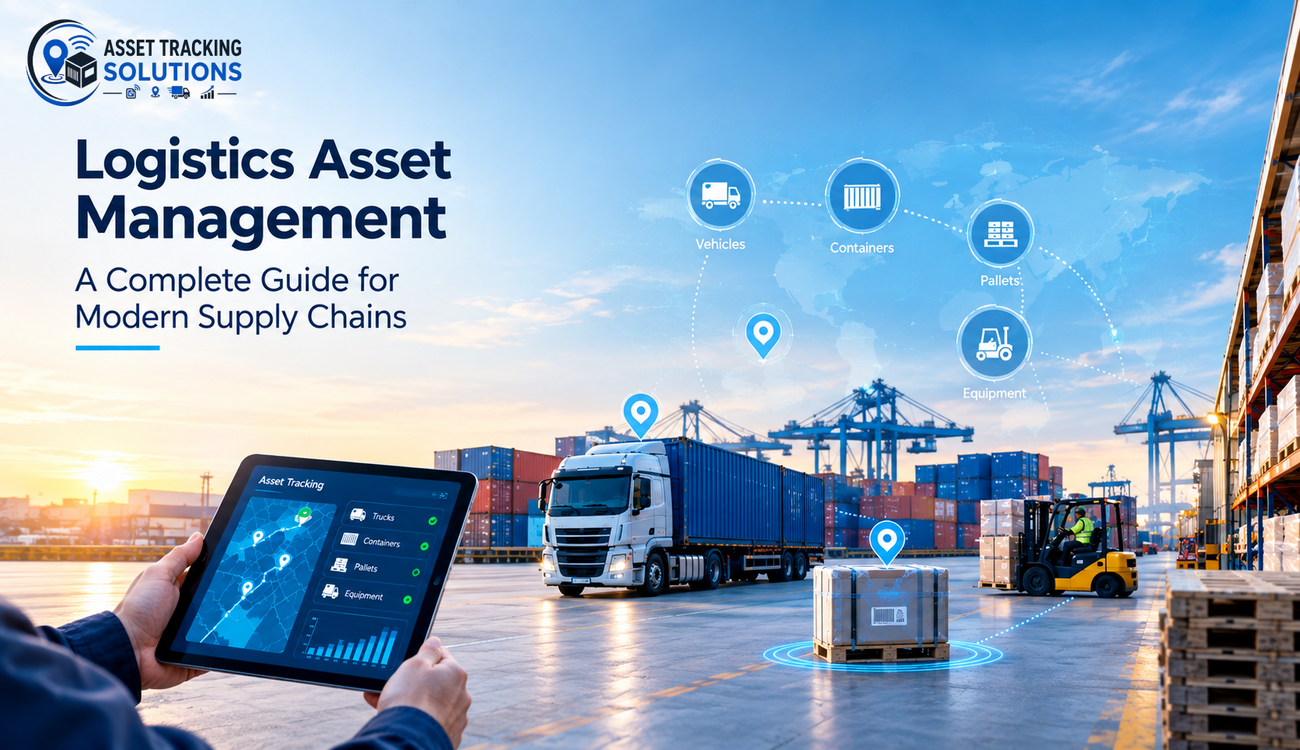
Modern supply chains depend on the continuous movement and availability of assets. From trucks, containers, pallets, and forklifts to reusable packaging, warehouse equipment, and high-value goods, every asset contributes to the efficiency of logistics operations. When businesses cannot accurately track where assets are, how they are being used, or when they require maintenance, operational costs can quickly increase and service quality can decline.
This is where Logistics Asset Management for Supply Chains becomes increasingly important. It provides organizations with structured ways to monitor, track, maintain, and optimize physical assets throughout their logistics networks. By combining technologies such as RFID, GPS, IoT sensors, barcode systems, cloud platforms, and analytics, companies can gain greater visibility into their assets and make better operational decisions.
What Is Logistics Asset Management?
Logistics asset management refers to the processes and technologies used to monitor, control, maintain, and optimize physical assets involved in logistics operations. These assets may include transportation vehicles, containers, pallets, material-handling equipment, warehouse machinery, returnable transport items, and other resources required to move and store products.
The objective is not simply to know where an asset is located. Effective management also involves understanding its condition, utilization, movement history, maintenance requirements, ownership, and operational value. This information helps businesses reduce unnecessary asset purchases, prevent losses, improve utilization, and keep logistics operations running smoothly.
For modern enterprises, Logistics Asset Management for Supply Chains provides a foundation for connecting asset-level information with broader supply chain processes. Instead of relying on spreadsheets, manual inspections, or disconnected systems, organizations can create a more centralized and data-driven approach to asset management.
Why Asset Management Matters in Modern Logistics
Supply chains have become more complex because businesses increasingly operate across multiple warehouses, distribution centers, transportation networks, suppliers, and customer locations. Assets frequently move between these environments, making manual tracking difficult and creating opportunities for loss, delays, and inefficient utilization.
Poor visibility can result in assets remaining unused for long periods while other locations experience shortages. Missing pallets and containers can increase replacement costs, while poorly maintained vehicles or equipment can cause unexpected downtime. In addition, organizations may struggle to determine whether their existing asset base is sufficient for current operational requirements.
With Logistics Asset Management for Supply Chains, organizations can establish a more reliable view of their physical resources. Real-time or near-real-time information can help logistics teams understand asset availability, movement, utilization, and condition, allowing them to respond to operational problems before they become expensive disruptions.
Key Technologies Used in Logistics Asset Management
RFID for Automated Asset Identification
RFID technology enables organizations to identify and track assets using electronic tags and readers. Unlike traditional barcode processes, RFID can support automated identification without requiring direct line-of-sight scanning.
In warehouses and distribution environments, RFID can help organizations monitor pallets, containers, equipment, and returnable assets as they move through designated locations. Automated data capture can reduce manual effort and improve the accuracy of asset records.
GPS and Location Tracking
GPS technology is particularly useful for transportation assets such as trucks, trailers, and mobile equipment. It allows businesses to monitor asset locations and movement patterns across geographic areas.
Location data can support route planning, delivery monitoring, theft prevention, and fleet utilization analysis. When integrated with logistics platforms, GPS information can also contribute to broader operational visibility.
IoT Sensors and Condition Monitoring
IoT sensors can collect information about the condition and environment of assets. Depending on the application, sensors may monitor temperature, humidity, vibration, shock, movement, fuel consumption, or equipment performance.
This capability is especially valuable for assets that require controlled conditions. Businesses can use sensor-generated information to identify unusual conditions and take action before asset damage or operational failure occurs.
Cloud-Based Asset Management Platforms
Cloud platforms provide a centralized environment for storing and accessing asset information. Instead of maintaining separate records across different locations, organizations can create a unified asset database that can be accessed by authorized teams.
Cloud-based systems can also connect asset information with warehouse management, transportation management, ERP, and other enterprise applications. This creates a more connected operational environment where asset information can support wider supply chain decisions.
How Logistics Asset Management Improves Supply Chain Operations
Better Asset Visibility
One of the biggest advantages of Logistics Asset Management for Supply Chains is improved visibility. Businesses can gain a clearer understanding of where assets are located and how they move across the logistics network.
This visibility can reduce uncertainty and help teams locate assets faster. For example, if a reusable container is required at a particular warehouse, employees can determine whether an available container is already present at another facility rather than automatically purchasing another one.
Improved Asset Utilization
Asset utilization is closely connected with logistics efficiency. An organization may own hundreds or thousands of assets, but not all of them may be used effectively.
Tracking utilization patterns allows companies to identify underused assets and redistribute them where they are needed. This can reduce unnecessary capital expenditure and help organizations obtain more value from their existing infrastructure.
Reduced Asset Loss and Theft
Assets that move between multiple locations can be difficult to monitor manually. Missing pallets, containers, tools, and equipment can create recurring financial losses.
Technology-enabled tracking provides organizations with better accountability. Movement records can show when an asset entered or left a location, helping teams investigate discrepancies and improve control over high-value resources.
Predictive Maintenance
Traditional maintenance approaches often depend on fixed schedules or reactive repairs. Connected asset monitoring can provide a more intelligent alternative.
When equipment generates operational data, organizations can identify performance changes and potential problems earlier. Predictive maintenance can help reduce unexpected downtime, extend asset life, and improve operational continuity.
Building an Effective Asset Management Strategy
Start With Asset Classification
The first step is to identify the different types of assets within the logistics network. Organizations should understand which assets are critical, where they are used, how frequently they move, and what information needs to be collected.
This classification helps businesses determine which assets require basic identification and which require advanced monitoring through sensors or location technologies.
Define Tracking and Visibility Requirements
Not every asset needs the same level of tracking. Some assets may only require identification when entering or leaving a warehouse, while others may need continuous location and condition monitoring.
Companies should therefore define their operational requirements before selecting technology. The right approach depends on asset value, movement frequency, business risk, environmental conditions, and required visibility.
Integrate Asset Data With Existing Systems
Asset management becomes more valuable when information can flow between operational systems. Integration with ERP, warehouse management, transportation management, procurement, and maintenance platforms can eliminate data silos.
For example, an asset’s movement information can be connected with shipment data, while maintenance information can be linked with equipment records. This creates a more complete operational picture and enables teams to make decisions using connected information.
Establish Data Governance
Accurate data is essential for effective asset management. Organizations should define processes for asset registration, identification, status updates, ownership, maintenance records, and retirement.
Consistent asset IDs and standardized data structures can prevent duplicate records and inaccurate information. Strong governance also ensures that employees across different facilities follow the same processes.
The Role of Analytics in Asset Optimization
Asset tracking generates valuable operational data, but simply collecting information does not automatically improve performance. Businesses need analytics to transform asset data into actionable insights.
Analytics can reveal utilization rates, movement patterns, maintenance trends, idle periods, loss rates, and operational bottlenecks. Managers can use these insights to identify assets that are frequently underutilized or determine which locations experience recurring shortages.
Advanced analytics can also support demand forecasting and capacity planning. By understanding historical asset usage, businesses can anticipate future requirements and allocate resources more efficiently.
Common Challenges in Logistics Asset Management
Despite its benefits, implementing an asset management strategy can involve several challenges. Organizations may operate with legacy systems, inconsistent asset identification methods, fragmented databases, or limited integration between departments.
Another challenge is ensuring employee adoption. A technically advanced system can still deliver poor results if employees do not follow asset identification and tracking procedures correctly.
Cost is another consideration. RFID infrastructure, IoT sensors, GPS devices, software platforms, integration, and maintenance can require an initial investment. Businesses should therefore prioritize high-value use cases and measure operational improvements against implementation costs.
Data security should also be considered, particularly when asset information is connected to cloud platforms and enterprise applications. Organizations need appropriate access controls, authentication mechanisms, monitoring, and data protection practices.
Future of Logistics Asset Management
The future of Logistics Asset Management for Supply Chains will increasingly involve intelligent automation, connected devices, artificial intelligence, and predictive analytics. As more physical assets become connected, organizations will gain access to larger volumes of real-time operational information.
AI can help identify patterns in asset movement, forecast maintenance requirements, detect unusual behavior, and recommend better resource allocation. Digital twins can further enhance visibility by creating virtual representations of assets and logistics environments, allowing organizations to analyze operational scenarios before making physical changes.
Edge computing is also expected to play a larger role where logistics operations require rapid processing. Data generated by sensors and connected devices can be analyzed closer to the source, helping organizations respond quickly to operational events.
These developments will make Logistics Asset Management for Supply Chains more proactive. Instead of simply tracking assets after an event occurs, businesses will increasingly use predictive insights to anticipate problems, optimize resources, and improve logistics performance.
Best Practices for Successful Implementation
Successful implementation requires more than selecting a tracking technology. Organizations should begin with clearly defined business objectives and identify the operational problems they want to solve.
A phased implementation can be useful, particularly for large supply chains. Companies can begin with a specific warehouse, asset category, or transportation process and evaluate results before expanding across the wider network.
Businesses should also establish measurable performance indicators. Asset utilization, loss rates, maintenance costs, turnaround time, tracking accuracy, and return on investment can help determine whether the program is delivering meaningful value.
Employee training is equally important. Teams should understand how the system works, why accurate asset data matters, and how the information will support their daily responsibilities.
Conclusion
Modern logistics requires more than moving products from one location to another. Businesses need continuous visibility into the resources that support those movements. Effective asset management helps organizations control costs, improve utilization, reduce losses, strengthen maintenance processes, and make better operational decisions.
Logistics Asset Management for Supply Chains provides the framework for achieving these outcomes by combining asset identification, tracking, IoT connectivity, cloud platforms, analytics, and system integration. As supply chains become increasingly connected and data-driven, organizations that manage their physical assets intelligently will be better positioned to improve efficiency, resilience, and long-term competitiveness.
The future will move toward more predictive and automated asset management, where businesses can anticipate requirements, identify risks, and optimize resources before operational problems occur. For modern supply chains, treating assets as connected and measurable resources can become an important step toward building a more visible, responsive, and efficient logistics network.
FAQs
Q1. What is Logistics Asset Management?
Logistics Asset Management is the process of tracking, monitoring, maintaining, and optimizing assets such as vehicles, pallets, containers, warehouse equipment, and reusable transport items throughout the supply chain.
Q2. Why is Logistics Asset Management important for modern supply chains?
It improves asset visibility, utilization, maintenance, and accountability while helping businesses reduce asset loss, unnecessary purchases, operational delays, and overall logistics costs.
Q3. Which technologies are used for Logistics Asset Management?
Common technologies include RFID, GPS, IoT sensors, barcode systems, cloud-based platforms, analytics, and AI. These technologies help organizations collect accurate asset information and monitor movement and condition.
Q4. How does Logistics Asset Management reduce supply chain costs?
It helps businesses identify underutilized assets, prevent losses, optimize maintenance, reduce equipment downtime, and make better use of existing resources, which can lower replacement and operational expenses.
Q5. How can businesses implement Logistics Asset Management successfully?
Businesses should begin by identifying critical assets and defining tracking requirements. They can then select suitable technologies, integrate asset data with existing enterprise systems, establish data standards, and implement the solution in phases.