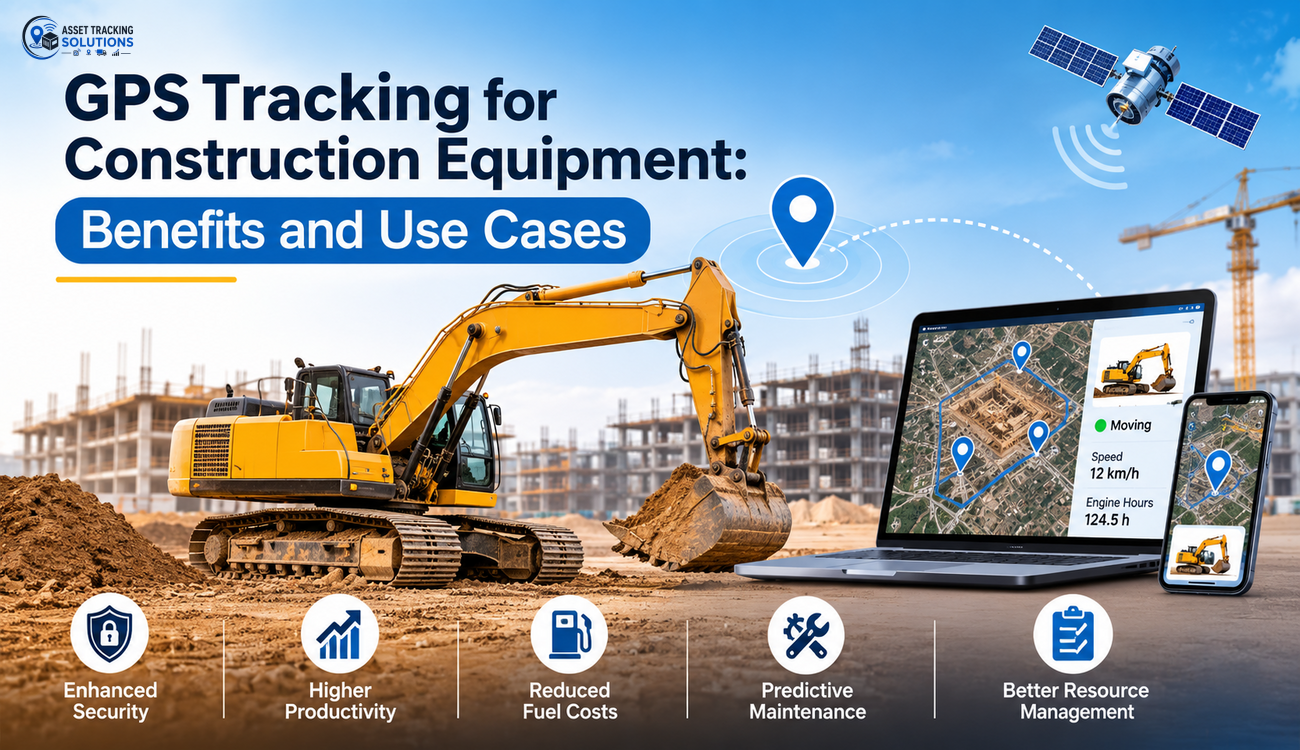
The construction industry depends on heavy equipment, machinery, and vehicles to complete projects efficiently and meet strict deadlines. From excavators and bulldozers to cranes, loaders, dump trucks, and concrete mixers, construction equipment plays an essential role in daily operations. However, managing these assets across multiple construction sites can become challenging when businesses lack accurate information about their location, movement, usage, and operational condition. Equipment theft, unauthorized usage, inefficient allocation, and unexpected downtime can increase project costs and affect overall productivity. This is where GPS Tracking for Construction Equipment becomes an important technology for modern construction businesses.
It enables companies to monitor the real-time location of heavy machinery, track equipment movement, analyze utilization, and improve asset security. By integrating GPS technology with centralized tracking platforms, construction managers can gain better visibility into their equipment and make informed operational decisions.
As construction projects become larger and more complex, businesses need smarter ways to manage their machinery and resources. GPS-based tracking solutions help simplify equipment management, reduce operational inefficiencies, and improve coordination between different construction sites. This technology also supports better resource planning by providing useful information about equipment availability and usage patterns.
What is GPS Tracking for Construction Equipment?
GPS tracking is a technology that uses the Global Positioning System to determine and monitor the geographical location of vehicles, machinery, and other mobile assets. In construction environments, GPS tracking devices are installed on heavy equipment to collect location information and transmit it to a centralized software platform through cellular or other supported communication networks.
GPS Tracking for Construction Equipment allows construction companies to monitor machinery remotely without depending entirely on manual inspections or location updates from equipment operators. Managers can access tracking information through web-based dashboards or mobile applications and view where their equipment is operating.
Modern GPS tracking systems can offer more than basic location monitoring. Depending on the hardware and software capabilities, they can provide information about equipment movement, operating hours, idle time, travel history, geofencing alerts, and engine activity.
For example, a construction company operating several excavators across different project locations can use GPS tracking to identify which machines are active, which are idle, and which are available for another project. This visibility helps managers allocate resources more effectively while reducing unnecessary transportation and equipment rental expenses.
How does GPS Tracking Work in Construction Equipment?
GPS tracking systems combine hardware devices, satellite positioning, communication networks, and tracking software to provide real-time or periodic equipment location information.
The process begins when a GPS tracking device installed on construction machinery receives positioning signals from GPS satellites. Using these signals, the device calculates the equipment’s geographical coordinates, including its latitude and longitude.
The collected information is then transmitted to a centralized tracking platform through cellular networks or other supported communication technologies. The platform processes the incoming data and displays equipment locations on digital maps.
Construction managers can access this information through a computer, tablet, or smartphone. Depending on the tracking solution, they may also receive notifications when equipment moves outside an approved area, operates during restricted hours, or remains inactive for an extended period.
Advanced systems can integrate GPS tracking with telematics sensors, engine monitoring devices, RFID technology, and fleet management software. These integrations provide a broader understanding of equipment performance and operational activities.
Key Benefits of GPS Tracking for Construction Equipment
Implementing GPS tracking technology can improve equipment visibility, strengthen security, and support better resource management. Its benefits extend beyond location monitoring because construction businesses can use tracking information to improve everyday operations.
1. Real-Time Equipment Location Visibility
Construction companies frequently operate machinery across multiple project locations, making it difficult to identify the exact position of every asset. Without a centralized tracking system, managers may need to contact equipment operators or conduct manual inspections to locate specific machines.
GPS Tracking for Construction Equipment provides real-time or near-real-time location visibility, depending on device connectivity and reporting frequency. Managers can view equipment positions through digital maps and identify which project site each machine is assigned to.
This visibility becomes particularly useful when equipment needs to be transferred between locations or when managers need to locate machinery quickly. It also reduces communication delays and makes equipment coordination easier across different construction projects.
2. Improved Equipment Security and Theft Prevention
Heavy construction machinery represents a significant financial investment, making equipment theft a serious concern for construction businesses. Machinery left unattended at remote construction sites, storage yards, or temporary project locations can become vulnerable to unauthorized movement.
GPS tracking helps improve equipment security by monitoring asset locations and identifying unusual movement patterns. Geofencing functionality allows managers to create virtual boundaries around approved construction sites, equipment yards, and storage areas.
If a tracked machine moves outside its designated boundary, the system can generate an alert. Managers can then review the movement information and take appropriate action.
Although GPS tracking cannot physically prevent theft, it can help businesses detect suspicious activity earlier, monitor stolen equipment locations, and support recovery efforts.
3. Better Equipment Utilization and Productivity
Underutilized machinery can increase operational expenses because construction companies continue paying for equipment ownership, maintenance, insurance, and storage even when machines are not being used productively.
GPS tracking systems equipped with utilization monitoring capabilities help managers understand how frequently equipment operates and how long it remains idle.
By analyzing equipment usage reports, businesses can identify machines that are frequently inactive and redistribute them to projects where they are needed. This approach improves resource allocation and helps companies get more value from their existing equipment.
4. Reduced Fuel Consumption and Operating Costs
Fuel is one of the major operating expenses associated with construction machinery. Excessive idling, unnecessary movement, inefficient routes, and unauthorized usage can increase fuel consumption.
GPS tracking solutions can provide location history, operating-hour information, and movement patterns that help managers identify potential sources of fuel wastage.
For example, if a bulldozer remains active without performing productive work for extended periods, managers can investigate the reason and introduce better operating practices.
Reducing unnecessary equipment movement and excessive idling can contribute to lower fuel expenses and more efficient construction operations.
5. Simplified Equipment Maintenance Planning
Unexpected equipment breakdowns can interrupt construction activities, delay project completion, and increase repair costs. Regular maintenance is therefore essential for keeping machinery in good working condition.
GPS tracking systems with telematics integration can monitor engine hours and equipment usage. Managers can use this information to schedule preventive maintenance based on actual operating hours rather than relying entirely on fixed calendar intervals.
Some advanced solutions also support engine diagnostics and maintenance-related alerts when compatible sensors and equipment interfaces are available.
This approach helps construction companies plan servicing activities, reduce unexpected breakdowns, and improve equipment availability.
6. Better Equipment Allocation Across Construction Sites
Construction businesses often manage multiple projects that require different types of machinery at different stages. A lack of equipment visibility can lead to unnecessary rentals, underutilized assets, and delays in machinery allocation.
GPS Tracking for Construction Equipment helps managers identify available machinery and understand where specific assets are currently operating.
For instance, if one project has completed its excavation work while another project requires an excavator, managers can check equipment availability and coordinate its transfer.
This improves asset distribution, reduces unnecessary equipment purchases, and helps businesses manage multiple projects more efficiently.
Major Use Cases of GPS Tracking in the Construction Industry
GPS tracking technology supports several practical applications across construction operations. Its usefulness depends on equipment type, project requirements, tracking hardware, and the level of integration with existing management systems.
1. Tracking Heavy Construction Machinery
Excavators, bulldozers, cranes, loaders, graders, and other heavy machinery are essential for large-scale construction projects. Since these machines frequently move between different operational areas, monitoring their location is important for effective equipment management.
GPS devices allow construction managers to identify machinery locations, review movement history, and monitor equipment assigned to particular projects.
This is particularly beneficial for companies managing large fleets across multiple construction sites.
2. Monitoring Construction Vehicles and Transportation
Dump trucks, water tankers, concrete mixers, and material transportation vehicles frequently travel between construction sites, warehouses, suppliers, and material collection points.
GPS tracking helps businesses monitor vehicle movement, review travel routes, and understand transportation activities.
Managers can use this information to improve vehicle coordination, identify unnecessary journeys, and maintain better visibility into material transportation operations.
3. Geofencing for Construction Site Management
Construction sites often have defined operational boundaries, equipment storage areas, and restricted zones. Monitoring equipment movement within these areas is important for maintaining control over machinery.
Geofencing enables managers to establish virtual geographical boundaries around selected locations.
When tracked equipment enters or exits these predefined zones, the system can generate notifications based on configured rules.
This functionality is useful for monitoring equipment transfers, identifying unauthorized movement, and maintaining better control over machinery operating across multiple project locations.
4. Monitoring Equipment Idle Time
Equipment idle time occurs when machinery remains switched on or available without performing productive activities. Excessive idling can contribute to unnecessary fuel consumption and operating expenses.
GPS tracking solutions with engine-hour or telematics capabilities help managers identify prolonged idle periods and evaluate equipment usage patterns.
For example, a construction manager can compare operating hours across several excavators to understand whether machinery is being used efficiently.
These insights can support better scheduling, operator awareness, and equipment allocation.
5. Managing Rental Construction Equipment
Construction companies frequently rent machinery to meet temporary project requirements. However, managing rented equipment can become complicated when multiple machines are deployed across different locations.
GPS tracking provides rental businesses and construction companies with better visibility into equipment locations and movement.
Rental providers can monitor whether machinery remains at its assigned project location, while construction managers can coordinate equipment usage and transfers.
It can also help businesses maintain better records of equipment deployment and operating hours when supported by the tracking platform.
6. Construction Fleet Management
Large construction organizations often manage dozens or hundreds of vehicles and machines across different regions. Coordinating such a fleet manually can consume considerable time and create information gaps.
GPS tracking platforms centralize equipment information and provide managers with a common interface for monitoring their assets.
By integrating GPS data with fleet management systems, businesses can improve equipment scheduling, monitor fleet activity, and coordinate machinery across projects.
Essential Features to Consider in a Construction Equipment GPS Tracking System
Choosing the right tracking solution requires understanding the operational requirements of construction businesses. A suitable system should support the equipment types, project environments, and monitoring requirements of the organization.
Real-Time GPS Tracking
The system should provide accurate equipment positioning and configurable location updates to help managers monitor machinery movement.
Geofencing and Movement Alerts
Geofencing capabilities allow businesses to define authorized operating areas and receive alerts when equipment moves beyond specified boundaries.
Equipment Utilization Reports
Utilization reports help managers understand operating hours, idle periods, and equipment activity to improve resource planning.
Historical Route Tracking
Movement history allows businesses to review previous equipment locations and investigate unauthorized movement or unusual travel patterns.
Mobile and Web-Based Access
A user-friendly dashboard and mobile application make it easier for project managers and fleet supervisors to monitor equipment from different locations.
Integration with Telematics Systems
Integration with compatible telematics devices can provide additional information about engine hours, fuel consumption, diagnostics, and equipment performance.
Challenges of Implementing GPS Tracking in Construction Equipment
Although GPS tracking offers several operational benefits, businesses should consider certain implementation challenges before deploying a solution.
One common challenge is equipment compatibility. Construction fleets often include machinery from different manufacturers and production years, which may require different installation methods or hardware configurations.
Connectivity can also become an issue at remote construction sites where cellular network coverage is limited. Businesses should evaluate device connectivity options and data synchronization capabilities before selecting a tracking platform.
Another consideration is installation and maintenance. GPS devices must be installed securely and configured correctly to provide reliable tracking information. Equipment exposed to dust, vibration, moisture, and extreme temperatures may require ruggedized tracking hardware.
Finally, companies need to ensure that employees understand how the technology works and how tracking information will be used. Proper training, clear operational policies, and appropriate access controls can support smoother adoption.
Future of GPS Tracking Technology in Construction Equipment Management
The future of construction equipment management will increasingly depend on connected technologies, automation, and data-driven decision-making. GPS tracking is becoming an important part of this transformation as businesses look for better ways to monitor machinery and improve operational visibility.
Integration with Artificial Intelligence (AI) and predictive analytics can help construction companies identify equipment usage patterns, recognize unusual movement, and improve resource allocation. When connected with suitable telematics and maintenance data, these systems can also support predictive maintenance strategies.
The combination of GPS, IoT, cloud computing, and advanced analytics can create a connected equipment management environment where construction managers access operational information through centralized platforms.
As these technologies continue to develop, GPS Tracking for Construction Equipment will play an important role in helping construction businesses improve asset visibility, strengthen security, and manage increasingly complex projects.
Conclusion
Managing construction equipment efficiently requires more than knowing where machinery is located. Businesses need accurate information about equipment movement, utilization, operating hours, and availability to reduce operational inefficiencies and maintain project productivity.
GPS tracking technology provides construction companies with the visibility needed to monitor heavy machinery, improve equipment security, reduce unnecessary movement, and coordinate assets across multiple project locations. Its integration with IoT, telematics, and fleet management platforms can further strengthen equipment monitoring and support smarter operational decisions.
By adopting GPS Tracking for Construction Equipment, construction businesses can move towards more connected, transparent, and efficient equipment management practices. Investing in the right tracking solution can help organizations make better use of their machinery, control operating expenses, and improve overall project management.
FAQs
Q1. What is GPS Tracking for Construction Equipment?
GPS Tracking for Construction Equipment is a technology that uses GPS-enabled devices to monitor the real-time location and movement of heavy machinery. It helps construction companies track excavators, bulldozers, cranes, loaders, and other equipment through a centralized platform.
Q2. What are the main benefits of GPS tracking in construction equipment?
The main benefits include real-time equipment visibility, improved theft prevention, better machinery utilization, reduced fuel consumption, simplified maintenance planning, and more efficient equipment allocation across multiple construction sites.
Q3. How does GPS tracking help prevent construction equipment theft?
GPS tracking helps prevent equipment theft through real-time location monitoring and geofencing alerts. When machinery moves outside a predefined geographical boundary, the system can notify managers, allowing them to investigate suspicious movement and take timely action.
Q4. Can GPS tracking monitor construction equipment usage and idle time?
Yes, GPS tracking systems integrated with telematics can monitor equipment operating hours, movement patterns, and idle time. This information helps construction managers identify underutilized machinery, reduce unnecessary idling, and improve equipment productivity.
Q5. How can construction companies choose the right GPS tracking solution?
Construction companies should consider tracking accuracy, real-time monitoring capabilities, geofencing, equipment compatibility, utilization reports, connectivity, mobile access, and integration with existing fleet management systems. Selecting a solution based on specific project and equipment requirements can improve long-term operational efficiency.