Businesses across industries depend on valuable physical assets to maintain daily operations, deliver services, and meet customer expectations. These assets may include vehicles, construction equipment, industrial machinery, medical devices, containers, and mobile tools. However, managing assets across multiple locations can become challenging when organizations rely on manual records, spreadsheets, or disconnected tracking systems. Limited visibility can lead to misplaced equipment, unnecessary purchases, delayed operations, and higher maintenance costs. A GPS Asset Tracking System helps businesses address these challenges by providing location visibility and supporting better asset management decisions.
As companies expand their operations, real-time information about asset movement and utilization becomes increasingly important. GPS technology enables organizations to monitor the location of compatible assets, review movement history, and receive alerts based on predefined conditions. When connected with asset management software, these capabilities can help businesses improve accountability, reduce losses, and make more effective use of their resources.
Understanding how GPS-based asset tracking works, where it delivers value, and how to implement it effectively can help organizations build a more reliable and efficient asset management strategy.
What is a GPS Asset Tracking System?
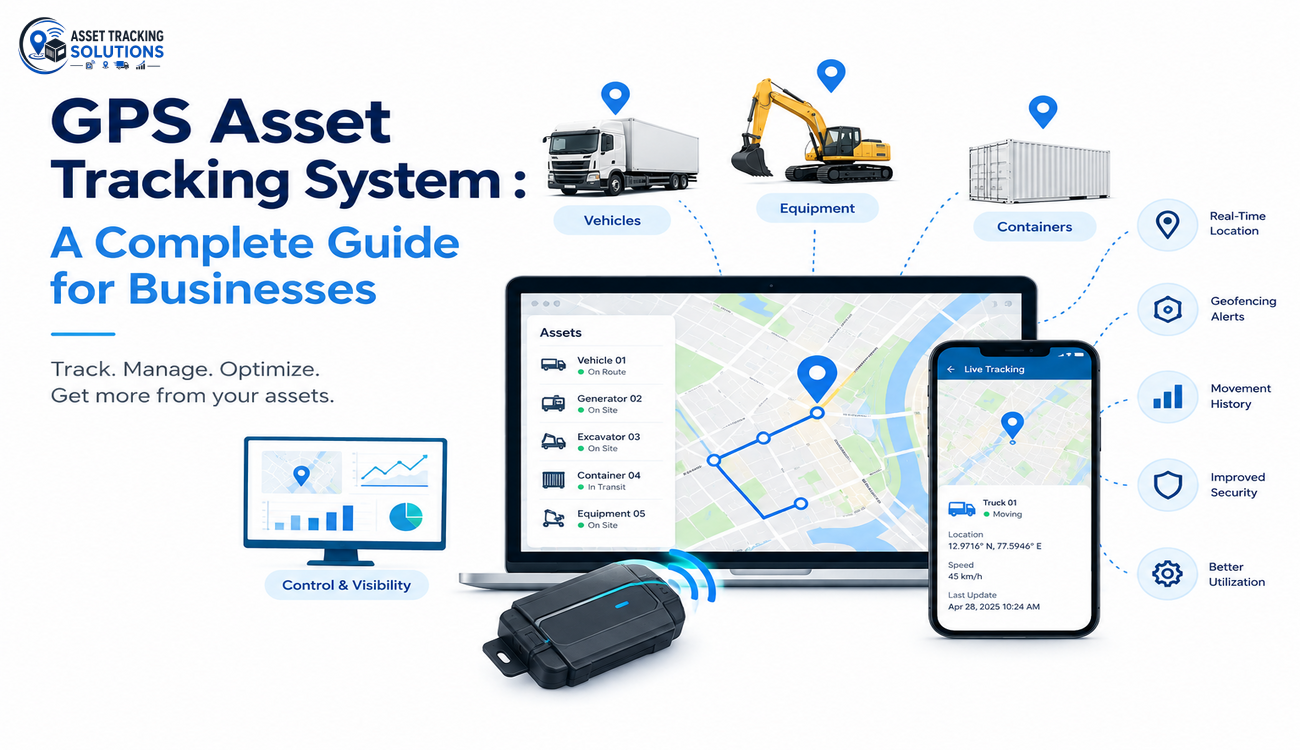
A GPS Asset Tracking System is a technology solution that uses Global Positioning System signals and tracking devices to determine the location of physical assets. The tracking device collects location information and transmits it through a communication network, such as cellular connectivity or another supported wireless connection, to a software platform where authorized users can view and analyze the information.
Depending on the device and configuration, the system may also provide movement history, geofence alerts, usage information, and selected sensor data. Businesses can access this information through web dashboards or mobile applications, making it easier to monitor assets distributed across warehouses, construction sites, transportation routes, and remote facilities.
Unlike traditional asset registers, which primarily record ownership and assigned locations, GPS-based tracking can provide updated information about where mobile assets are located. However, tracking frequency, location accuracy, and availability depend on device capabilities, connectivity, environmental conditions, and configuration.
How does GPS Asset Tracking Work?
GPS asset tracking involves several connected components that work together to collect, transmit, and present location information. The GPS receiver in a tracking device determines its position using signals from navigation satellites. The device then uses an available communication method to send that information to a central platform.
The tracking platform processes incoming information and displays asset locations on a digital map. Depending on the solution, users may also review historical movement, configure alerts, assign assets to departments, and generate reports for operational analysis.
For example, a construction company may attach GPS trackers to generators, excavators, and mobile equipment operating across different project sites. When an asset moves beyond an authorized location, the system can generate an alert if geofencing is configured and the device can report its position.
A well-integrated platform can also connect location information with maintenance records, asset ownership, utilization data, and other business applications. This creates a more complete picture of asset availability and operational performance.
Why Businesses Need a GPS Asset Tracking System
Asset management becomes more complicated when equipment moves frequently between facilities, employees, suppliers, and project locations. Without reliable tracking, employees may spend valuable time searching for equipment, confirming its last known location, or arranging replacements for assets that cannot be found.
A GPS-based solution helps businesses improve location visibility and establish clearer accountability for mobile assets. Managers can identify where equipment is being used, review movement patterns, and investigate unexpected transfers. This can be especially useful for organizations that operate large vehicle fleets, rent equipment, or manage valuable assets across multiple sites.
The system can also support better planning by helping managers understand asset availability and movement. Instead of purchasing additional equipment immediately, a business may discover that underutilized assets can be transferred from another location.
When combined with suitable policies and asset management processes, GPS tracking can help reduce avoidable losses, improve resource allocation, and support more informed operational decisions.
Key Benefits of GPS Asset Tracking for Businesses
Improved Asset Visibility
Location visibility helps organizations understand where their mobile assets are located without depending entirely on phone calls or manual updates. This is valuable for businesses managing equipment across warehouses, customer sites, construction projects, and distribution networks.
A centralized dashboard can give authorized employees access to location information from a single interface. Managers can use this information to coordinate equipment transfers, confirm availability, and respond more quickly when an asset cannot be located.
Reduced Asset Loss and Theft Risks
Valuable equipment may be lost, misplaced, or moved without authorization, particularly when it is used across several locations. GPS tracking can help businesses identify unexpected movement and review an asset’s reported location.
Geofencing allows organizations to define virtual boundaries around approved areas. When a compatible tracker reports that an asset has entered or left a configured boundary, the platform can trigger an alert.
GPS tracking does not guarantee theft prevention or recovery, but it can provide useful information for investigation and response. The effectiveness of these capabilities depends on connectivity, device installation, reporting frequency, and the surrounding environment.
Better Asset Utilization
Businesses often own or rent more equipment than they need at particular locations because they lack accurate information about existing availability. Tracking data can help managers identify idle assets, frequently moved equipment, and resources that may be shared between departments.
By reviewing location history alongside assignment and utilization records, organizations can make better decisions about asset allocation. This can reduce unnecessary purchases, improve resource planning, and support more productive use of existing equipment.
Lower Operational Costs
Asset losses, emergency equipment rentals, unnecessary transportation, and inefficient resource allocation can increase operating expenses. Location information can help businesses investigate these problems and identify opportunities for improvement.
A GPS asset tracking solution may also reduce the administrative effort involved in locating equipment and coordinating transfers. However, businesses should evaluate the full cost of devices, connectivity, software subscriptions, installation, and maintenance when calculating the financial benefits.
Industries That Benefit from GPS Asset Tracking
Construction and Infrastructure
Construction companies manage expensive equipment across project sites, temporary storage areas, and remote locations. GPS tracking helps teams monitor the location of machinery, generators, trailers, and other mobile assets.
When project managers can review asset locations, they can coordinate equipment transfers more efficiently and investigate unauthorized movement. Location information can also support equipment allocation across projects, helping businesses reduce idle time and avoid unnecessary rentals.
Logistics and Transportation
Logistics providers manage vehicles, trailers, containers, and other mobile resources across complex supply chains. GPS tracking can improve visibility into asset movement and help teams identify the last reported location of equipment.
When integrated with fleet management software, asset tracking can complement route planning, dispatch coordination, and operational reporting. Businesses should distinguish between asset tracking and vehicle telematics because some solutions provide only location information, while others also capture driver behavior, engine data, fuel consumption, or vehicle diagnostics.
Manufacturing and Warehousing
Manufacturing facilities and warehouses often move equipment, material-handling devices, and mobile resources between production areas and storage locations. GPS can support tracking when assets move across outdoor or geographically distributed areas.
For indoor environments, GPS signals may be unreliable or unavailable. RFID, Bluetooth Low Energy, ultra-wideband, and other indoor positioning technologies may be more appropriate, depending on the required accuracy and operating conditions.
A combined tracking strategy can help manufacturers maintain visibility across different environments without relying on one technology for every use case.
Healthcare and Medical Equipment
Healthcare organizations need reliable access to mobile equipment such as transport units, portable diagnostic devices, and selected medical assets. GPS tracking can help locate equipment that moves between facilities or across outdoor hospital campuses.
For detailed indoor tracking, healthcare providers may require technologies designed for hospital interiors. Any implementation should also account for patient privacy, access controls, device compatibility, and applicable data protection requirements.
Essential Features to Look for in a GPS Asset Tracking System
Real-Time or Frequent Location Updates
Businesses should select a tracking frequency that matches their operational needs. Some assets require frequent updates because they move continuously, while stationary or low-risk equipment may only need periodic location reports.
More frequent reporting can improve visibility but may increase battery consumption, communication costs, and data usage. The appropriate configuration depends on the asset’s value, movement patterns, and risk profile.
Geofencing and Automated Alerts
Geofencing allows users to define authorized locations and receive alerts when assets cross specified boundaries. This can help businesses monitor movement between facilities and investigate activity outside approved operating areas.
Alert settings should reflect real operational requirements to avoid unnecessary notifications. Businesses should also define who receives alerts and what actions employees should take when an exception occurs.
Historical Location Reports
Historical tracking records help organizations review movement patterns and investigate incidents. Reports can support asset recovery, equipment transfer reviews, and operational planning.
The system should allow authorized users to search records by asset identifier, date, location, or other relevant fields. Data retention should be configured according to operational needs, privacy considerations, and applicable requirements.
Integration With Asset Management Software
A GPS platform becomes more useful when it connects with existing enterprise systems. Integration with ERP, fleet management, maintenance, inventory, and asset management software can link location data with ownership, servicing schedules, asset assignments, and operational records.
This integration reduces the need for duplicate data entry and helps organizations use tracking information in everyday business processes.
How to Implement a GPS Asset Tracking System Successfully
Step 1: Identify Business Requirements
Start by determining which assets need tracking and what problems the organization wants to solve. These may include asset loss, poor utilization, delayed transfers, unauthorized movement, or limited visibility across facilities.
Define the locations involved, required reporting frequency, expected tracking accuracy, and the employees who will use the platform. Clear requirements make it easier to select an appropriate solution.
Step 2: Choose Suitable Tracking Devices
Tracking devices should match the type, value, operating environment, and movement patterns of the assets. Businesses may need battery-powered trackers for mobile equipment, ruggedized devices for harsh conditions, or externally powered units for assets with a reliable power source.
Consider battery life, network coverage, installation requirements, environmental protection, and the availability of replacement devices before finalizing the selection.
Step 3: Select the Right Software Platform
The tracking platform should provide reliable location visualization, asset records, alert configuration, reporting, and user management. Organizations with complex operations may also require application programming interfaces, custom dashboards, and integration with existing enterprise applications.
The software should be easy for employees to use and provide access controls appropriate to each role. Businesses should also review service availability, support arrangements, data security, and subscription costs.
Step 4: Conduct a Pilot Implementation
Before tracking every asset, test the solution with a limited group of equipment across representative locations. A pilot helps evaluate location accuracy, connectivity, battery performance, reporting intervals, and the usefulness of alerts.
Collect feedback from employees and managers to identify practical issues. Use the findings to refine device placement, system settings, training, and operating procedures before expanding the deployment.
Step 5: Monitor Results and Optimize Performance
After implementation, review system performance against the objectives established during planning. Useful measures may include asset recovery time, utilization rates, unexplained asset movements, tracking availability, and the reduction in time spent locating equipment.
Regularly review device health, connectivity, alert quality, and data retention settings. A GPS Asset Tracking System should be treated as an ongoing operational capability that improves as business requirements and tracking practices evolve.
Common Challenges and How to Overcome Them
GPS asset tracking may encounter limitations in enclosed buildings, underground facilities, dense urban environments, and locations with obstructed satellite signals. Businesses should test devices in their actual operating environments and consider complementary positioning technologies where necessary.
Battery life can also become a challenge when trackers report locations frequently. Configuring appropriate reporting intervals and selecting devices designed for the required operating conditions can help balance visibility with power consumption.
Another consideration is data integration. Disconnected systems may create duplicate asset records or make it difficult to connect location data with maintenance and inventory information. Standardized asset identifiers, integration testing, and clear data ownership can help maintain consistency.
Organizations should also establish policies governing access to tracking information. Role-based permissions, secure communication, audit logs, and clear employee communication can help ensure that the technology is used responsibly.
Conclusion
Effective asset management requires accurate information, reliable processes, and the ability to respond quickly when equipment moves between locations. GPS-based tracking helps businesses improve visibility, reduce avoidable losses, coordinate resources, and make better decisions about asset utilization.
A well-designed GPS Asset Tracking System can support construction companies, logistics providers, manufacturers, healthcare organizations, and other businesses that manage valuable mobile assets. Selecting suitable devices, integrating tracking data with existing software, and measuring operational results are essential for achieving long-term value.
Frequently Asked Questions (FAQs)
Q1. What is a GPS Asset Tracking System?
A GPS Asset Tracking System is a technology solution that uses GPS-enabled devices and tracking software to monitor the location and movement of physical assets. Businesses can use it to track vehicles, machinery, containers, and mobile equipment, improve asset visibility, reduce losses, and manage resources more efficiently.
Q2. How does GPS asset tracking work?
GPS asset tracking devices receive signals from navigation satellites to determine their location. The devices transmit location information through available communication networks to a tracking platform, where authorized users can view asset positions, review movement history, and configure alerts based on specific conditions.
Q3. Which industries benefit from GPS asset tracking?
Industries such as logistics, construction, manufacturing, transportation, healthcare, and equipment rental can benefit from GPS asset tracking. It helps organizations locate mobile assets, monitor movement, improve equipment utilization, reduce unnecessary rentals, and coordinate operations across multiple locations.
Q4. What features should businesses look for in a GPS asset tracking solution?
Businesses should consider location updates, geofencing alerts, historical tracking reports, battery performance, device durability, data security, and integration with existing asset management software. The right features depend on asset type, operating conditions, tracking frequency, and business requirements.
Q5. How can a GPS Asset Tracking System reduce business costs?
A GPS Asset Tracking System can help reduce costs by improving asset utilization, limiting losses, reducing time spent locating equipment, and supporting better resource allocation. Businesses can also use tracking data to identify underused assets and avoid unnecessary purchases or equipment rentals.