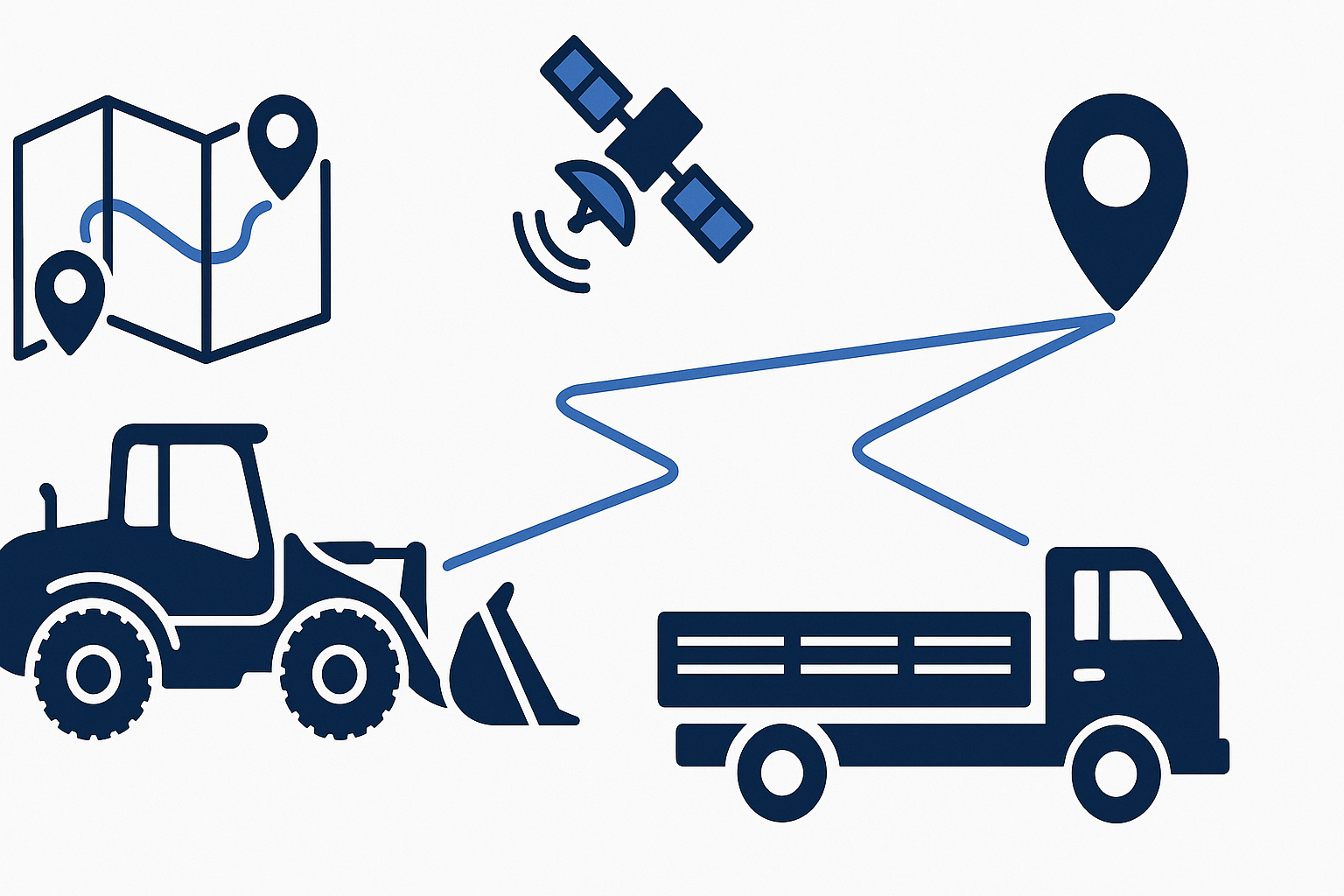
A single idle excavator on a major site can cost ₹6,000–₹10,000 per day in lost productivity. Across India, construction firms lose crores annually to misplaced equipment, theft, and project delays—often due to poor asset visibility. Construction asset tracking attacks this problem head-on with real-time monitoring and data-driven control.
TL;DR
- Construction asset tracking uses GPS, RFID, and IoT to monitor equipment, tools, and materials in real time across job sites.
- Firms reduce theft, minimise idle time, and improve utilisation—saving up to 10–15% in operational costs.
- Automated alerts, maintenance scheduling, and analytics dashboards help prevent project delays and boost productivity.
- Solutions are scalable for small contractors to large infrastructure firms, with typical ROI in 6–12 months.
Why Asset Tracking Matters in Indian Construction
Asset misplacement, theft, and underutilisation are chronic issues on Indian sites, from metro rail builds to housing projects. According to a report by IBEF, India’s construction sector is projected to reach $1.4 trillion by 2025, yet margins remain tight due to operational inefficiencies. Manual registers and walkie-talkies cannot keep pace with multi-site projects, complex supply chains, and rising equipment costs. Asset tracking technology directly tackles these leakages—reducing theft, idle hours, and costly delays that erode profitability.
What Is Construction Asset Tracking?
Construction asset tracking is the process of using technology—such as GPS (Global Positioning System), RFID (Radio Frequency Identification), and IoT (Internet of Things) sensors—to monitor and manage the location, usage, and condition of physical assets on job sites. This includes earth-moving equipment, vehicles, tools, generators, and even materials like steel and cement. The data is fed to a central dashboard, allowing managers to track assets in real time, automate inventory, receive maintenance alerts, and prevent unauthorised movement or loss. In India, this shift is increasingly driven by rising equipment costs, insurance requirements, and the scale of infrastructure projects.
Key Technologies: GPS, RFID, and IoT Sensors Explained
Construction asset tracking solutions combine several technologies, each suited for different asset types and site conditions:
- GPS tracking: Devices installed on heavy machinery and vehicles provide real-time location data via satellite, accessible from any location. GPS is ideal for outdoor equipment and vehicles moving between sites. Learn more about how GPS works.
- RFID tags: Small, battery-free tags are attached to tools, materials, and smaller assets. RFID readers at site gates or warehouses automatically log asset movement, preventing loss and enabling fast inventory audits. See AIS-140 requirements from ARAI for RFID and GPS use in fleet management.
- IoT sensors: Smart sensors monitor asset health (fuel, temperature, vibration), usage hours, and environmental conditions. Data is sent to cloud-based software for analysis, automating maintenance and improving safety.
Asset tracking platforms integrate these technologies, often connecting with ERP or project management systems for seamless operations.
What Can You Track? Common Construction Assets
Not all assets require the same level of tracking. Here are typical categories and examples:
| Asset Type | Examples | Tracking Tech |
|---|---|---|
| Heavy Equipment | Excavators, cranes, loaders, dumpers | GPS, IoT sensors |
| Vehicles | Tippers, concrete mixers, pickups | GPS, RFID |
| Tools & Small Equipment | Drills, vibrators, welding sets | RFID, BLE tags |
| Materials | Steel, cement, pipes, scaffolding | RFID, barcode |
| Site Equipment | Generators, compressors, lighting towers | IoT sensors, GPS |
Each category’s tracking needs vary by value, risk, and mobility. For example, an excavator may get a rugged GPS tracker with engine hour monitoring, while hand tools use RFID tags for check-in/check-out control.
How Construction Asset Tracking Works: Step-by-Step
Implementing an asset tracking system involves four main steps:
- Asset Tagging: Each asset is fitted with a GPS tracker, RFID tag, or IoT sensor, depending on its type and usage.
- Data Collection: Devices transmit location, usage, and health data to a cloud-based platform via mobile network or Wi-Fi.
- Centralised Monitoring: Managers access a dashboard showing real-time asset status, utilisation, and movement across all sites.
- Automated Alerts & Reports: The system sends notifications for unauthorised movement, maintenance due dates, low utilisation, or asset inactivity.
This process eliminates manual registers and enables proactive management. For a deep dive into technology choices, read GPS vs BLE vs RFID: Choosing the Right Asset Tracking Technology.
Benefits: From Theft Prevention to Productivity Gains
Indian construction sites face asset theft, idle machinery, delayed maintenance, and inventory errors—all leading to cost overruns. Asset tracking addresses these pain points, delivering measurable returns:
- Theft reduction: Real-time alerts for unauthorised movement and geofencing cut equipment loss by up to 50%, according to recent PIB releases on infrastructure project safety.
- Higher asset utilisation: Analytics reveal underused machinery so you can redeploy or rent out surplus equipment, improving ROI.
- Reduced downtime: Automated maintenance reminders and engine hour tracking minimise unexpected breakdowns, typically cutting downtime by 20–30%.
- Faster audits: RFID tagging enables instant inventory checks for tools and materials, reducing manual effort and errors.
- Improved project planning: Integration with ERP allows for accurate project costing, scheduling, and resource allocation.
Industry estimates suggest that firms adopting asset tracking can save 10–15% in operational costs within the first year, with typical payback in under 12 months. For more on metrics and KPIs, see Fleet and GPS Asset Tracking: Metrics Every Operations Team Should Monitor.
Challenges and Best Practices for Indian Contractors
Deploying asset tracking is not plug-and-play. Indian contractors face unique obstacles:
- Network coverage: Remote or underground sites may have patchy mobile connectivity. Solutions often use offline data logging or hybrid (GSM + Wi-Fi) devices.
- Asset diversity: From ₹5 lakh excavators to ₹2,000 hand tools, one size does not fit all. A mix of GPS, RFID, and BLE tags is usually required.
- Staff adoption: Training site teams to use mobile apps, scanners, and dashboards is critical for success.
- Integration: Connecting asset tracking with ERP, billing, or project management tools maximises value but requires careful planning.
Best practices include starting with high-value equipment, piloting on one site, and scaling based on ROI. For a practical RFID deployment guide, explore RFID Asset Tracking System: A Practical Implementation Guide.
How to Select the Right Construction Asset Tracking Solution
Choosing a tracking solution depends on your fleet size, project complexity, and regulatory needs. Here’s a checklist for Indian contractors:
- Compatibility: Does it support both GPS and RFID? Can it handle your range of assets (vehicles, tools, materials)?
- Scalability: Can the system grow from a single site to pan-India operations?
- Ease of use: Are mobile apps and dashboards user-friendly for site teams?
- Integration: Does it link with your ERP, payroll, or maintenance systems?
- Support & compliance: Does the provider offer local support and meet Indian standards such as MoRTH and AIS-140?
- Analytics: Are there dashboards for utilisation, theft alerts, and maintenance scheduling?
- Pricing: Are costs transparent—hardware, software, and per-asset/month charges?
To understand cloud software selection, see Cloud-Based Asset Management Software: What to Look for Before You Buy.
For industry-specific solutions and real-world deployment advice, visit our Construction Asset Tracking Solutions page.
For a broader technology checklist, see Warehouse Asset Tracking Checklist for RFID, Barcode and IoT.
See your entire site on one dashboard
Get a live demo of construction asset tracking in action. Discover how real-time data can reduce losses, automate maintenance, and keep your project on schedule. Tailored for Indian contractors, from single sites to pan-India fleets.
Implementation Costs and ROI Benchmarks
Asset tracking solutions are now accessible to both large infrastructure players and mid-size contractors. Costs depend on the number of assets, technology mix, and software features:
| Component | Typical Range (₹) |
|---|---|
| GPS tracker (AIS-140 compliant) | 2,500–6,000 per device |
| RFID tag | 50–300 per tag |
| IoT sensor | 1,000–5,000 per unit |
| Software subscription | 100–400 per asset/month |
Industry benchmarks show most firms recover their investment within 6–12 months, thanks to reduced theft, optimised equipment use, and fewer project delays. According to MarketsandMarkets research, the global construction asset management market is growing at 13–15% CAGR, reflecting strong ROI for adopters.
Compliance, Insurance, and the Future of Construction Asset Tracking
As Indian infrastructure projects scale up, asset tracking is increasingly tied to compliance and insurance requirements. MoRTH and state RTOs mandate AIS-140 GPS devices for commercial vehicles, while major public sector contracts require proof of asset monitoring for payments and insurance claims. The next wave involves integration with NavIC satellite tracking and predictive analytics powered by AI, enabling even smarter site management.
For contractors, early adoption is now a competitive advantage—offering not just loss prevention, but higher productivity, faster audits, and better compliance with Indian and international standards.
FAQ — Construction Asset Tracking in India
What types of assets can be tracked on a construction site?
Commonly tracked assets include heavy machinery (excavators, cranes), vehicles (tippers, pickups), tools, generators, compressors, and materials such as steel, cement, and scaffolding. The tracking method—GPS, RFID, or IoT sensors—depends on the asset’s value, mobility, and risk of loss or theft.
How does construction asset tracking reduce theft?
Asset tracking systems use real-time GPS and RFID data to monitor asset movement. Geofencing triggers instant alerts if equipment moves outside designated boundaries. RFID logs tool check-in/out. These controls deter theft and enable rapid recovery, reducing losses by up to 50% on high-value equipment.
Is asset tracking mandatory for Indian construction firms?
While not universally mandated, AIS-140 GPS tracking is compulsory for commercial vehicles under MoRTH rules. Many government and PSU projects now require asset monitoring for payment milestones and insurance, making tracking a de facto requirement for larger contractors.
What is the typical ROI period for asset tracking solutions?
Most Indian contractors see payback within 6–12 months. Savings come from reduced theft, higher utilisation, fewer breakdowns, and faster audits. ROI depends on fleet size, technology mix, and operational discipline in using the system’s analytics and alerts.
Can asset tracking integrate with existing ERP or project management software?
Yes. Leading construction asset tracking platforms offer APIs and connectors for popular ERP and project management systems. This enables automatic asset data sync, improved project costing, and streamlined maintenance scheduling—maximising value from both systems.
What should I look for in a construction asset tracking provider?
Key factors include technology mix (GPS, RFID, IoT), scalability, ease of use, integration options, local support, compliance with Indian standards (AIS-140, MoRTH), and transparent pricing. Pilot deployments and references from similar contractors help validate provider claims and service quality.
Are there any challenges specific to Indian construction sites?
Site diversity, patchy network coverage, varying asset values, and workforce training are key challenges. Solutions must be rugged, support offline data capture, and be user-friendly for site teams. Local service and support are also important for rapid issue resolution.
How do I start with construction asset tracking?
Begin by tagging your highest-value assets (machinery, vehicles), pilot the system on one site, and train your staff. Use analytics to identify quick wins—such as idle equipment or maintenance gaps. Scale to more assets and sites as you demonstrate cost savings and process improvements.