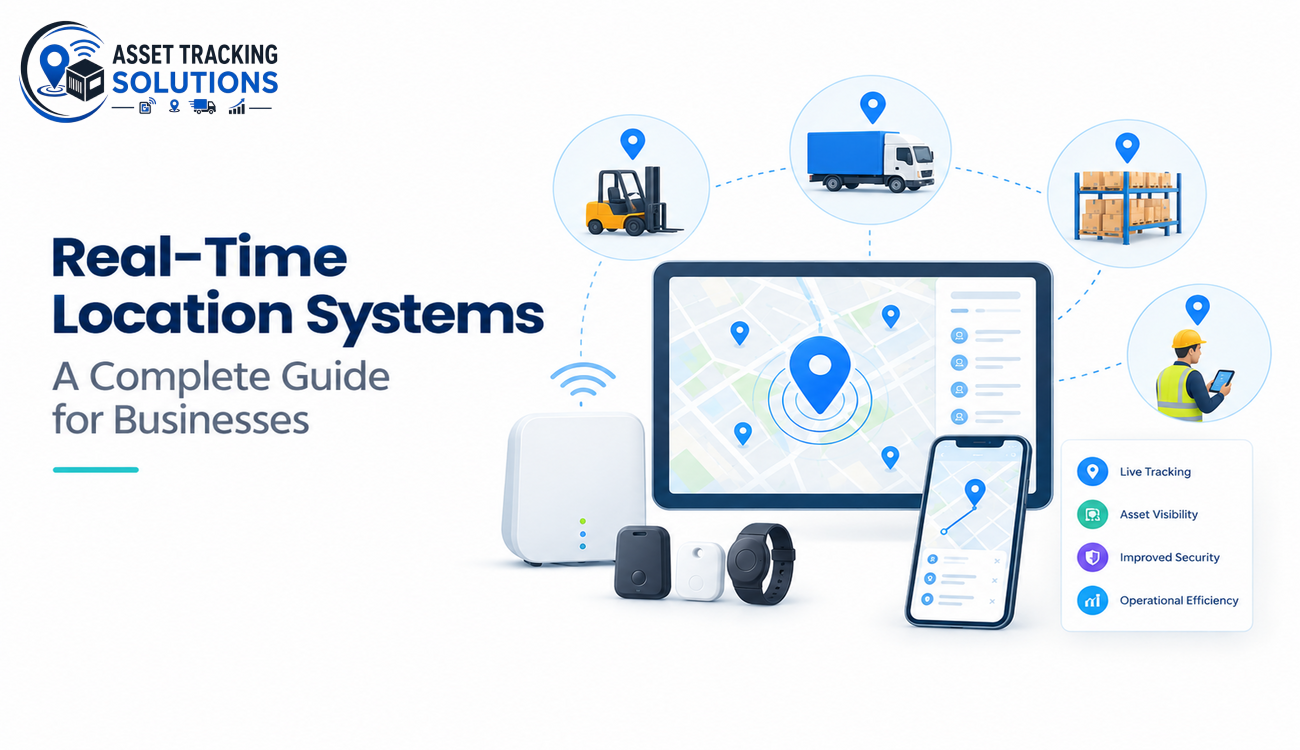
Businesses today need accurate, real-time information to manage assets, monitor operations, improve employee productivity, and deliver better customer experiences. Traditional tracking methods often rely on manual updates, periodic reports, or disconnected systems, making it difficult to understand where valuable resources are located at any given moment. This is where Real-Time Location Systems for Business become an important part of modern operational management.
Real-time location technology enables organizations to identify and track the position of assets, equipment, inventory, vehicles, and people within a defined environment. By combining location sensors, wireless communication, tracking tags, and software platforms, businesses can gain better visibility into their daily operations. These insights help reduce unnecessary delays, improve resource utilization, and support faster decision-making.
From manufacturing plants and healthcare facilities to warehouses and logistics networks, location intelligence is helping organizations move toward more connected and efficient operations. Understanding how these systems work, which technologies they use, and where they deliver value can help businesses determine the right approach for their operational needs.
What are Real-Time Location Systems?
A Real-Time Location System (RTLS) is a technology solution that identifies and tracks the location of tagged objects or people within a specific area. Depending on the technology and configuration, it can provide continuous or periodic location updates, allowing organizations to monitor the movement of resources across their facilities.
Unlike conventional tracking methods that depend on manual records, RTLS can automatically collect location information and display it through a centralized software dashboard. This makes it easier for managers to locate equipment, identify bottlenecks, monitor asset movement, and understand how resources are being used.
For organizations implementing Real-Time Location Systems for Business, the primary objective is to connect physical resources with actionable digital information. Instead of spending time searching for equipment or verifying inventory manually, employees can access location data and make informed decisions more quickly.
The level of accuracy and update frequency depends on the selected technology, the facility layout, environmental conditions, and the specific tracking requirements. Some systems provide room-level visibility, while others can identify locations within a few centimeters under suitable conditions.
How Do Real-Time Location Systems Work?
An RTLS solution combines hardware, connectivity, location-processing technology, and software to capture and interpret location information. Each component plays a specific role in converting the movement of physical resources into useful operational data.
Location Tags and Sensors
The process begins with tags attached to assets, equipment, vehicles, or other items that require tracking. These tags may use Bluetooth Low Energy (BLE), ultra-wideband (UWB), Wi-Fi, RFID-based technologies, or other supported communication methods to transmit identification or location-related signals.
Sensors, receivers, or fixed reference points collect these signals and help determine the position of each tagged resource. The appropriate configuration depends on whether the organization needs to track high-value equipment, mobile inventory, staff movement, or assets across a large facility.
Location Processing and Connectivity
Once signals are collected, the system processes the information to estimate the location of each tracked resource. Depending on the technology, this calculation may use signal strength, signal travel time, angle measurements, known reference points, or satellite positioning.
The resulting location data is transferred through the organization’s network to an RTLS software platform. Reliable connectivity and appropriate system configuration help maintain consistent visibility across the areas being monitored.
Software Dashboard and Alerts
The software platform converts location information into an understandable operational view. Managers can search for assets, view movement histories, configure geofencing rules, and receive alerts when resources enter or leave designated areas.
When integrated with inventory management, enterprise resource planning (ERP), warehouse management, or maintenance systems, location data can also support automated workflows. This allows Real-Time Location Systems for Business to become part of a broader digital operations strategy rather than functioning as an isolated tracking tool.
Key Technologies Used in Real-Time Location Systems
Different location technologies offer different levels of accuracy, coverage, cost, and power consumption. Selecting the right option requires understanding the environment in which the system will operate.
Bluetooth Low Energy (BLE)
BLE uses low-power wireless communication to support asset tracking across indoor environments. Bluetooth beacons and compatible tags can provide location estimates through nearby receivers or gateways, making the technology suitable for warehouses, hospitals, offices, and manufacturing facilities.
BLE is often attractive when businesses need scalable tracking without the cost of installing highly precise infrastructure throughout an entire facility. However, location accuracy depends on beacon placement, signal interference, building materials, and the positioning method used.
Ultra-Wideband (UWB)
UWB supports highly precise indoor positioning by measuring the time or other characteristics of radio signals between tags and fixed anchors. Under suitable conditions, it can deliver location accuracy at the centimeter level, making it useful for tracking tools, industrial equipment, medical devices, and moving assets that require precise positioning.
Although UWB can provide greater accuracy than many alternative indoor technologies, implementation may involve higher infrastructure costs and careful site planning.
Wi-Fi-Based Positioning
Wi-Fi positioning uses wireless network infrastructure and signal measurements to estimate the location of compatible devices or tags. It can be useful in facilities where Wi-Fi access points are already available, potentially reducing the need for additional infrastructure.
However, existing Wi-Fi networks may not provide the accuracy required for every tracking application. Businesses should evaluate coverage, signal conditions, device compatibility, and operational requirements before selecting this approach.
RFID-Based Location Tracking
Radio Frequency Identification (RFID) uses tags and readers to identify objects through radio signals. Passive RFID is commonly used for inventory identification and tracking items at specific checkpoints, while active RFID can support broader tracking capabilities through battery-powered tags.
RFID is particularly useful when organizations need to monitor item movement through receiving areas, storage zones, production stages, and dispatch points. The exact location visibility depends on the RFID system design, reader placement, and tag capabilities.
GPS and Satellite-Based Tracking
GPS is widely used for tracking vehicles, outdoor equipment, and mobile assets across large geographic areas. It supports applications such as fleet management, delivery monitoring, route visibility, and field service coordination.
GPS is less suitable for precise indoor tracking because satellite signals can be weakened or blocked by buildings and other structures. Businesses operating both indoors and outdoors may benefit from combining GPS with indoor positioning technologies.
Benefits of Real-Time Location Systems for Businesses
Implementing location intelligence can improve several aspects of operational performance. The most valuable benefits depend on the organization’s existing processes, the resources being tracked, and the quality of system integration.
Improved Asset Visibility
One of the biggest advantages of RTLS is the ability to locate important resources without relying entirely on manual searches. Employees can identify the approximate or precise location of equipment, tools, inventory, and other assets through a centralized interface.
Improved visibility can reduce time spent searching for misplaced items, support better asset allocation, and help teams understand where resources are needed most.
Higher Operational Efficiency
Location data helps managers identify delays caused by unnecessary movement, poor resource placement, and inefficient workflows. For example, a warehouse can analyze how frequently employees travel between storage zones, while a manufacturing facility can monitor the movement of tools and materials between production stations.
These insights can guide process improvements and reduce avoidable operational interruptions.
Reduced Asset Loss and Misplacement
Businesses often lose productive time when equipment is misplaced, transferred without proper records, or stored in unexpected locations. RTLS can help organizations monitor asset movement and generate alerts when tagged resources leave designated zones.
This is especially valuable for expensive equipment, shared tools, mobile devices, and critical operational assets that require stronger accountability.
Better Resource Utilization
Location information can reveal whether equipment is frequently used, underutilized, or positioned far from the teams that need it. Managers can use these insights to improve resource distribution and make more informed purchasing decisions.
A well-planned implementation of Real-Time Location Systems for Business can help organizations get greater value from existing assets before investing in additional equipment.
Enhanced Safety and Security
In suitable environments, RTLS can support worker safety by identifying the location of designated personnel, monitoring restricted zones, and helping teams locate emergency equipment. Geofencing can also generate alerts when tagged assets or authorized devices move into prohibited areas.
These capabilities can strengthen safety procedures, but they should complement established emergency response plans and security controls rather than replace them.
Industry Applications of Real-Time Location Systems
RTLS can support a wide range of business environments because organizations across industries face similar challenges involving asset visibility, movement, and resource coordination.
Manufacturing and Industrial Operations
Manufacturers can use RTLS to locate production tools, monitor work-in-progress materials, and improve visibility across assembly lines. Location information can help teams identify equipment that has been moved unexpectedly and reduce delays caused by missing tools.
When connected with manufacturing execution systems and maintenance platforms, RTLS can contribute to more coordinated production planning and equipment management.
Healthcare and Hospitals
Hospitals often manage large inventories of mobile medical devices, including infusion pumps, wheelchairs, monitoring equipment, and diagnostic tools. RTLS helps staff locate these resources more efficiently and understand their availability across departments.
Depending on the implementation, hospitals can also use location data to support equipment utilization analysis, environmental monitoring workflows, and selected patient or staff tracking applications. Any people-tracking deployment should include appropriate privacy protections and access controls.
Warehousing and Logistics
Warehouses and distribution centers handle continuous movement of inventory, vehicles, containers, and handling equipment. RTLS can improve visibility into where selected resources are located and how they move through receiving, storage, picking, packing, and dispatch areas.
Integrating location information with warehouse management systems can help organizations investigate delays, improve equipment allocation, and coordinate inventory movement more effectively.
Retail and Commercial Facilities
Retailers can use location technologies to improve visibility into high-value inventory, carts, reusable containers, and operational equipment. In larger commercial facilities, location data can also support maintenance coordination and resource planning.
The suitability of each application depends on the required accuracy, the movement patterns of tracked items, and the value of the insights generated.
Construction and Field Operations
Construction companies often manage expensive tools, machinery, temporary equipment, and materials across large or changing work sites. RTLS and related tracking technologies can help supervisors locate assets, monitor movement between work zones, and reduce time lost searching for equipment.
Outdoor operations may rely on GPS, while indoor or restricted areas may require complementary positioning technologies.
How to Implement Real-Time Location Systems Successfully
A successful RTLS implementation starts with a clear operational objective rather than selecting hardware first. Businesses should identify the problems they want to solve, such as asset misplacement, equipment downtime, inventory movement delays, or limited visibility across multiple facilities.
The next step is to assess the physical environment and determine the required tracking accuracy, coverage, update frequency, and number of assets. A warehouse tracking expensive machinery may require a different configuration from a hospital monitoring shared medical equipment.
Organizations should then evaluate suitable technologies, infrastructure requirements, tag durability, battery life, and compatibility with existing business systems. Integration is particularly important because location data becomes more useful when it supports inventory updates, maintenance requests, alerts, and operational reports.
A pilot project can help validate the system in a limited area before a wider rollout. During this phase, teams should measure location accuracy, update reliability, user adoption, and improvements in the operational problem being addressed.
Finally, businesses should establish clear procedures for tag maintenance, software updates, data access, employee training, and ongoing performance evaluation. A scalable deployment should be flexible enough to accommodate additional assets, locations, and business applications as requirements evolve.
Challenges and Considerations Before Adoption
Although RTLS offers significant advantages, organizations should evaluate implementation challenges before making a long-term investment.
Infrastructure costs can vary considerably depending on the selected technology, facility size, number of tags, and installation complexity. Radio-frequency interference, building materials, metal structures, and changing layouts can also affect positioning performance.
Data integration may require additional development, especially when existing business applications use different formats or lack suitable interfaces. Businesses must also account for battery replacement, device maintenance, network security, and system reliability.
Privacy is another important consideration when a solution tracks employees, patients, or other identifiable individuals. Organizations should define legitimate purposes, limit access to sensitive location data, communicate tracking policies clearly, and follow applicable privacy and employment requirements.
Careful planning, realistic performance expectations, and regular testing can help organizations manage these challenges and achieve better results from their investment.
The Future of Real-Time Location Systems
RTLS is increasingly becoming part of connected business environments that combine location intelligence with automation, artificial intelligence, Internet of Things (IoT) devices, and enterprise software. As these technologies develop, organizations can move beyond simply locating assets toward understanding operational patterns and anticipating potential problems.
AI-powered analytics may help identify unusual movement, predict resource demand, and highlight recurring workflow inefficiencies. Integration with digital twins can also provide a more detailed representation of physical facilities and resource movement, supporting operational planning and scenario analysis.
At the same time, improvements in wireless connectivity, sensor design, and location-processing techniques are expanding the range of possible applications. Businesses will increasingly evaluate solutions based not only on tracking accuracy but also on their ability to generate actionable insights and integrate with existing workflows.
For organizations pursuing digital transformation, Real-Time Location Systems for Business can provide an important foundation for more connected, data-driven operations.
Conclusion
Real-time location technology helps organizations understand where their assets are, how resources move, and where operational improvements may be possible. By reducing manual searches, improving visibility, and supporting better resource allocation, RTLS can contribute to greater productivity and more informed business decisions.
The right solution depends on the organization’s industry, facility layout, tracking objectives, required accuracy, and existing technology infrastructure. Evaluating these factors before implementation helps businesses choose a system that addresses genuine operational needs rather than introducing unnecessary complexity.
As digital operations continue to evolve, Real-Time Location Systems for Business can help companies build more transparent, responsive, and efficient workflows. With thoughtful implementation and effective integration, organizations can turn location data into practical insights that support long-term business growth.
Frequently Asked Questions (FAQs)
Q1. What are Real-Time Location Systems for Business?
Real-Time Location Systems for Business are technologies that help organizations track the location of assets, equipment, inventory, vehicles, or people within a defined area. They use technologies such as BLE, UWB, RFID, Wi-Fi, and GPS to provide location information, improve visibility, reduce asset misplacement, and support efficient business operations.
Q2. How do Real-Time Location Systems work?
RTLS uses tracking tags, sensors, receivers, connectivity, and software to identify the location of tagged resources. The system collects location-related signals, processes the information, and displays results on a centralized dashboard. Businesses can use this information to locate assets, monitor movement, configure alerts, and improve operational workflows.
Q3. Which industries benefit from Real-Time Location Systems?
Industries such as manufacturing, healthcare, warehousing, logistics, retail, and construction can benefit from RTLS. Manufacturers can track tools and work-in-progress materials, hospitals can locate medical equipment, and logistics companies can improve asset visibility. Construction businesses can also monitor equipment movement across work sites and reduce time spent searching for resources.
Q4. What is the difference between RTLS, RFID, and GPS?
RTLS is a broader category of systems used to determine the location of people or assets. RFID identifies tagged objects using radio-frequency signals and is commonly used for inventory tracking and checkpoint-based identification. GPS uses satellite signals to determine outdoor locations and is widely used for vehicle and fleet tracking. The best option depends on the required accuracy and operating environment.
Q5. What should businesses consider before implementing an RTLS solution?
Businesses should evaluate tracking accuracy, facility coverage, infrastructure costs, tag battery life, connectivity, and compatibility with existing software. Data security, employee privacy, maintenance requirements, and scalability are also important considerations. Starting with a pilot project helps organizations test performance, measure operational improvements, and select a suitable solution before expanding deployment.