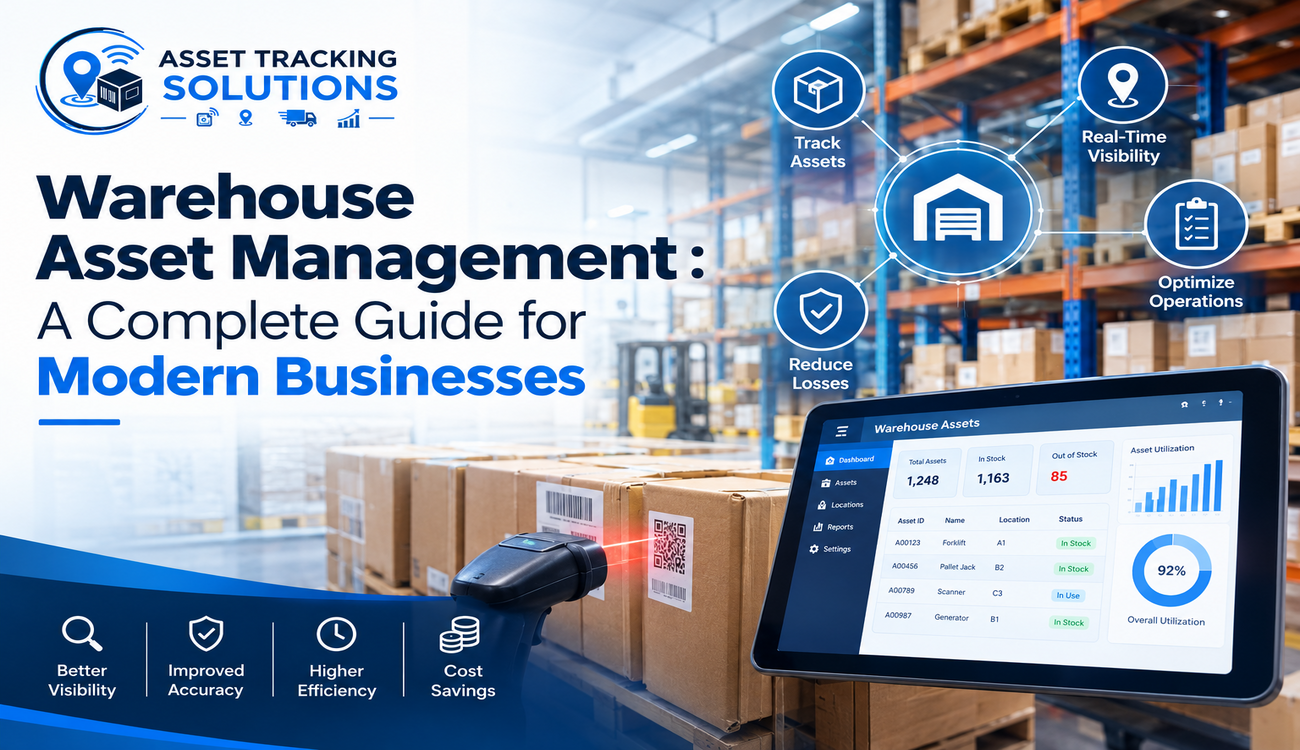
Modern warehouses are no longer simple storage spaces where products are received, arranged, and shipped. They have become highly connected operational environments where inventory, equipment, employees, technology, and data must work together efficiently. As businesses handle larger product volumes and face increasing expectations for faster fulfillment, accurate inventory, and lower operating costs, having better control over warehouse assets has become essential. Warehouse Asset Management provides a structured approach to monitoring, organizing, tracking, and maintaining the physical assets used throughout warehouse operations.
These assets can include inventory, material-handling equipment, storage infrastructure, handheld devices, containers, tools, vehicles, and other operational resources. By improving visibility across these assets, businesses can reduce losses, improve utilization, minimize downtime, and create more predictable warehouse operations.
What is Warehouse Asset Management?
Warehouse Asset Management refers to the systematic process of tracking and managing assets throughout their operational lifecycle within a warehouse environment. It combines processes, technologies, and data to help businesses understand where assets are located, how they are being used, who is responsible for them, and when they require maintenance or replacement.
Traditional warehouse processes often depend on spreadsheets, paper records, manual scanning, or employees remembering where particular assets were placed. These approaches can become difficult to manage as warehouse size and operational complexity increase. A digital approach provides a more centralized view of assets and enables warehouse teams to make decisions using current and reliable information.
Assets Covered in a Warehouse
Warehouse assets extend far beyond stored products. They can include forklifts, pallet jacks, racks, bins, pallets, reusable containers, handheld scanners, industrial computers, tools, loading equipment, and transportation-related resources. Depending on the organization, assets may also include high-value components, returnable packaging, maintenance equipment, and specialized machinery.
Managing these resources effectively requires businesses to understand their location, condition, movement, ownership, and usage history. This information helps warehouse managers identify inefficient processes and determine whether assets are being utilized effectively.
Why Asset Visibility Matters in Modern Warehouses
Visibility is one of the most important requirements for efficient warehouse operations. When businesses do not have accurate information about their assets, employees may spend significant time searching for equipment, checking records, or replacing items that have simply been misplaced.
Warehouse Asset Management helps create a centralized source of information that allows warehouse teams to understand asset movement and availability. Better visibility can support faster operational decisions while reducing unnecessary manual work.
For example, a warehouse manager may need to locate a specific material-handling device before starting a shift. Instead of contacting multiple employees or physically checking different areas, an integrated tracking system can provide information about its recorded location and status. Similar visibility can be applied to reusable containers, pallets, scanners, and other movable resources.
Key Technologies Used for Asset Management
Technology plays an important role in modern warehouse operations because manual processes often struggle to provide real-time visibility at scale. Different technologies can be used individually or combined depending on operational requirements.
RFID Technology
Radio Frequency Identification enables businesses to identify and track tagged assets using radio signals. Unlike conventional barcode systems, RFID can allow multiple tagged items to be identified without requiring direct line-of-sight scanning.
RFID can be particularly useful for tracking pallets, containers, equipment, tools, and other reusable assets moving through warehouses. Automated reading points can capture asset movements at entry and exit areas, storage zones, or operational checkpoints.
Barcode and Mobile Scanning
Barcode technology remains widely used because it is relatively simple and cost-effective. Warehouse employees can scan labels using handheld devices to record asset movement, receiving, dispatch, or inventory transactions.
When combined with mobile applications, barcode scanning can provide warehouse personnel with access to asset information while they are working on the warehouse floor. This reduces dependency on paperwork and helps maintain more consistent records.
IoT and Real-Time Tracking
Internet of Things technology can connect physical assets with sensors and communication systems. Depending on the use case, IoT devices can provide information about location, movement, temperature, utilization, or operating conditions.
For warehouses managing expensive equipment or sensitive materials, this data can help teams identify abnormal conditions and respond before operational problems become more serious.
Cloud-Based Platforms
Cloud platforms allow asset information to be stored centrally and accessed by authorized users across different locations. This becomes especially valuable for businesses operating multiple warehouses because managers can monitor information without maintaining isolated systems at every facility.
Cloud-based systems can also support integration with enterprise applications, reporting platforms, warehouse management systems, and analytics tools.
How Asset Management Improves Warehouse Operations
A well-designed asset management strategy can influence several areas of warehouse performance. The most immediate benefit is improved visibility, but the impact can extend to productivity, maintenance, cost control, and customer service.
Reducing Asset Loss and Misplacement
Lost or misplaced assets create unnecessary expenses. Employees may spend working hours searching for equipment, while businesses may purchase replacements even though the original assets still exist somewhere within the operation.
Tracking technologies can provide better information about asset locations and movement history. This makes it easier to identify where an asset was last recorded and investigate unusual movement patterns.
Improving Equipment Utilization
Not every warehouse asset is used equally. Some equipment may remain idle for long periods while other resources are heavily utilized. Monitoring usage data helps businesses identify these differences and make more informed decisions about resource allocation.
For example, utilization information can help determine whether additional equipment is genuinely required or whether existing resources can be redistributed between warehouse zones.
Supporting Preventive Maintenance
Equipment failures can interrupt warehouse operations and create safety or productivity concerns. Maintenance information allows organizations to monitor service schedules and identify assets approaching their maintenance requirements.
Instead of waiting for equipment to fail, warehouse teams can schedule maintenance based on usage, operating conditions, or predefined service intervals. This approach can help extend asset life and reduce unexpected downtime.
Integrating Asset Management With Warehouse Systems
Asset management becomes more valuable when it works alongside other warehouse and enterprise technologies. A warehouse should not operate with isolated data systems that require employees to repeatedly enter the same information.
Warehouse Management System Integration
A Warehouse Management System primarily focuses on inventory and warehouse processes, while asset tracking can provide additional visibility into equipment and operational resources. Connecting these systems can help organizations create a broader view of warehouse activities.
For instance, information about equipment availability can support operational planning, while inventory movement data can provide context for asset utilization.
ERP and Business System Integration
Enterprise Resource Planning platforms manage important business functions such as procurement, finance, purchasing, and asset records. Connecting warehouse data with ERP systems can improve consistency between operational activities and financial information.
When an asset is purchased, assigned, maintained, transferred, or retired, connected systems can help maintain a more complete lifecycle record.
Building an Effective Asset Management Strategy
Successful implementation requires more than installing tracking devices or purchasing software. Businesses first need to understand their operational requirements, asset categories, movement patterns, and existing processes.
Define Asset Categories and Ownership
The first stage is creating a clear asset structure. Businesses should identify which assets need to be tracked, what information should be recorded, and which teams are responsible for each asset category.
A consistent naming and identification system makes it easier to maintain accurate records as the warehouse grows.
Select the Right Tracking Technology
Different warehouse environments require different tracking approaches. Barcodes may be appropriate for straightforward scanning processes, while RFID or IoT technologies may be more suitable for high-volume or automated environments.
The right solution should consider warehouse size, asset value, movement frequency, environmental conditions, integration requirements, and budget.
Establish Data and Process Standards
Technology cannot compensate for inconsistent processes. Businesses should establish clear procedures for receiving, assigning, transferring, maintaining, and retiring assets.
Employees should also understand why accurate asset records matter and how their actions affect the reliability of the overall system.
Challenges Businesses May Face
Implementing Warehouse Asset Management can involve several challenges, particularly for organizations transitioning from manual processes. Initial technology investment, system integration, employee adoption, data migration, and process standardization may require careful planning.
Older warehouses may also contain equipment and assets that lack standardized identification. Creating accurate asset records can therefore require an initial audit. Businesses should treat implementation as a continuous operational improvement initiative rather than a one-time technology project.
Data security is another consideration when warehouse systems are connected to cloud platforms, IoT devices, or enterprise applications. Access controls, authentication, system monitoring, and appropriate data governance should be incorporated into the solution design.
The Role of Analytics and Automation
The future of warehouse operations is increasingly data-driven. Once asset information is collected consistently, businesses can analyze historical patterns to identify inefficiencies and opportunities for improvement.
Analytics can help warehouse managers understand asset utilization, maintenance frequency, movement patterns, and operational bottlenecks. Artificial intelligence can further support predictive maintenance, demand analysis, anomaly detection, and automated decision-making.
Automation can also reduce repetitive tasks. Automated identification systems, smart sensors, robotic equipment, and connected warehouse platforms can work together to capture information with less manual intervention. This creates an environment where operational teams can focus more on decision-making and exception management.
Future Trends in Warehouse Asset Management
The evolution of connected warehouses will continue to increase the importance of real-time data. RFID, IoT, artificial intelligence, computer vision, digital twins, robotics, and cloud platforms are increasingly being combined to create more intelligent warehouse environments.
Computer vision can help identify objects and monitor warehouse activities, while digital twins can provide virtual representations of physical operations. AI-powered analytics can use accumulated data to identify patterns that may not be immediately visible to human operators.
Another emerging trend is greater integration between warehouse systems and broader supply chain platforms. As organizations seek end-to-end visibility, asset information can become part of a larger network connecting suppliers, warehouses, transportation providers, distribution centers, and customers.
Conclusion
Effective asset visibility is becoming increasingly important as warehouses become larger, faster, and more technology-driven. Warehouse Asset Management gives organizations a structured way to monitor operational resources, improve utilization, reduce unnecessary losses, and support more reliable maintenance practices.
The most effective approach combines appropriate tracking technology with standardized processes, accurate data, employee adoption, and integration with existing business systems. Whether a business starts with barcode scanning, RFID, IoT tracking, or a broader connected warehouse platform, the objective remains the same: create better visibility and control over the resources that keep warehouse operations moving.
As warehouses continue to adopt automation and intelligent technologies, businesses that build reliable asset data foundations will be better positioned to improve operational efficiency, control costs, and respond to changing supply chain demands.
Frequently Asked Questions
Q1. What is Warehouse Asset Management?
Warehouse Asset Management is the process of tracking, monitoring, maintaining, and optimizing physical assets used within warehouse operations. It can cover equipment, pallets, containers, tools, scanners, machinery, and other operational resources. Businesses use technologies such as RFID, barcodes, IoT, and cloud-based platforms to improve asset visibility and control.
Q2. Why is asset tracking important for warehouses?
Asset tracking helps warehouses maintain better visibility into the location, movement, condition, and utilization of their resources. It can reduce misplaced equipment, minimize unnecessary purchases, improve employee productivity, and support more efficient warehouse operations by providing reliable information about available assets.
Q3. Which technologies are used for warehouse asset tracking?
Common technologies include RFID, barcode scanning, IoT sensors, GPS, cloud platforms, mobile applications, and real-time location systems. The appropriate technology depends on factors such as warehouse size, asset type, tracking requirements, operating environment, and the level of automation required.
Q4. How can asset management reduce warehouse operating costs?
A structured asset management approach can reduce costs by minimizing asset loss, improving equipment utilization, supporting preventive maintenance, and reducing unnecessary replacement purchases. Better visibility can also help warehouse managers identify underused resources and allocate them more efficiently.
Q5. Can warehouse asset management integrate with existing business systems?
Yes. Modern asset management platforms can integrate with Warehouse Management Systems, ERP platforms, inventory systems, IoT platforms, and analytics tools. Integration allows businesses to connect asset information with broader operational data and create a more unified view of warehouse activities.