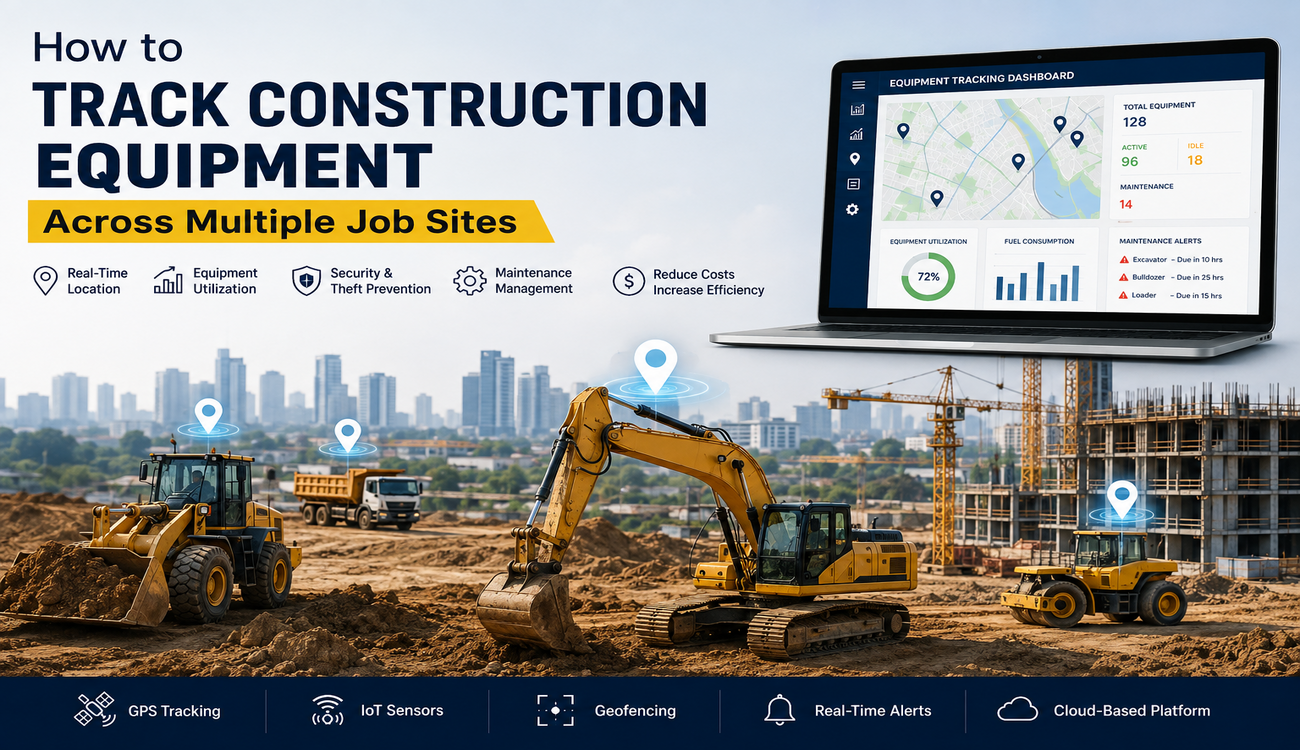
Managing construction equipment across multiple job sites can become difficult when machines, tools, and vehicles are constantly moving between locations. Excavators, cranes, loaders, bulldozers, generators, compressors, and other high-value assets need to be available at the right place and at the right time. Without proper visibility, construction companies can face equipment downtime, unnecessary rentals, theft, maintenance delays, and inefficient asset utilization. The ability to Track Construction Equipment across multiple job sites gives construction companies better control over their assets.
Modern equipment tracking systems combine GPS, RFID, IoT sensors, telematics, and cloud-based software to provide real-time information about equipment location, movement, utilization, and operational status. This allows project managers and equipment managers to make faster and more informed decisions while reducing avoidable costs.
Why Construction Equipment Tracking Matters Across Multiple Job Sites?
Construction companies often manage several projects simultaneously, with equipment being transferred between different locations based on project requirements. When equipment movement is managed manually through spreadsheets, phone calls, or paper records, it becomes difficult to maintain an accurate picture of where every asset is located.
The Challenge of Managing Equipment Across Different Locations
A machine may be assigned to one construction site but later moved to another project without the equipment register being updated immediately. This can create discrepancies between actual equipment locations and recorded information. Project managers may spend valuable time calling site supervisors to locate a machine or determine whether it is available.
Equipment tracking technology provides a centralized view of assets across all job sites. Instead of relying entirely on manual communication, managers can access current equipment information through a centralized platform.
Reducing Equipment Downtime and Unnecessary Rentals
When construction equipment cannot be located quickly, companies may rent another machine even though a suitable asset is already available at another site. This increases project costs and can lead to unnecessary equipment purchases or rentals.
By using technology to Track Construction Equipment, managers can identify underutilized machines and determine whether they can be reassigned to projects where demand is higher. Better equipment visibility can improve utilization while reducing unnecessary rental expenses.
Technologies Used to Track Construction Equipment
Different construction environments require different tracking technologies. Many organizations use a combination of technologies depending on equipment type, project requirements, and tracking objectives.
GPS Equipment Tracking
GPS is one of the most commonly used technologies for tracking construction machinery and vehicles. A GPS tracking device installed on equipment can provide location information through a centralized software platform.
GPS tracking is particularly useful for mobile assets such as excavators, loaders, cranes, trucks, and other heavy machinery that frequently move between job sites. Managers can monitor equipment locations and review movement history to understand how assets are being used.
GPS-based tracking can also provide alerts when equipment moves outside a defined geographic area. This geofencing capability can help companies identify unauthorized movement and improve asset security.
RFID Equipment Tracking
RFID technology uses tags and readers to identify and track assets. An RFID tag can be attached to equipment, tools, or other construction assets, while RFID readers capture identification information when assets pass through designated locations.
RFID is useful when construction companies need to maintain accurate records of equipment movement between warehouses, yards, workshops, and job sites. It can also help automate equipment check-in and check-out processes.
IoT Sensors and Connected Equipment
IoT-enabled tracking systems can collect more than just location data. Sensors installed on construction equipment can capture information such as operating hours, engine status, fuel consumption, temperature, vibration, and equipment usage.
This information can provide construction managers with a broader understanding of equipment performance. Instead of simply knowing where a machine is located, managers can also understand whether it is operating, idle, or potentially requiring maintenance.
Telematics for Heavy Machinery
Equipment telematics combines GPS, machine data, sensors, and communication technologies to provide detailed information about heavy equipment. Modern construction machinery may already include telematics capabilities that can transmit operational data to a centralized platform.
Telematics can help companies understand equipment utilization, engine hours, fuel consumption, idle time, and maintenance requirements. This makes it useful for organizations managing large fleets across multiple construction projects.
How to Track Construction Equipment Across Multiple Job Sites
A successful tracking strategy requires more than installing tracking devices. Construction companies need a structured process that connects equipment identification, location monitoring, data management, and reporting.
Create a Centralized Equipment Database
The first step is to create a centralized record of all equipment. Each asset should have a unique identification number associated with information such as equipment type, model, ownership status, current assignment, maintenance history, and operational details.
A centralized database makes it easier to understand which assets are available, which are assigned to projects, and which are currently undergoing maintenance.
Install the Appropriate Tracking Device
The tracking technology should be selected according to the equipment and business requirements. GPS devices may be appropriate for mobile heavy machinery, while RFID tags can be useful for tools and smaller assets.
For connected machinery, IoT sensors and telematics can provide additional operational information. The objective should be to select technology that provides useful data without creating unnecessary complexity.
Connect Equipment Data to Cloud-Based Software
A cloud-based equipment tracking platform can bring information from multiple job sites into a centralized system. Project managers can access equipment information from a computer, tablet, or mobile device without depending on individual site records.
Cloud platforms also make it easier to share information between equipment managers, project managers, maintenance teams, and site supervisors.
Use Geofencing to Monitor Equipment Movement
Geofencing allows companies to create virtual boundaries around construction sites, storage yards, warehouses, or restricted areas. When tracked equipment enters or leaves a defined area, the system can generate an alert.
This can help managers identify unauthorized equipment movement and monitor transfers between projects. Geofencing can also provide a historical record of where equipment has traveled.
Monitor Equipment Utilization
Location tracking becomes more valuable when combined with utilization data. A machine may be physically present at a construction site but remain unused for several days.
Utilization monitoring can help managers identify idle equipment and determine whether it should be reassigned. This can improve asset productivity and help projects make better use of existing equipment.
Benefits of Tracking Construction Equipment Across Job Sites
Implementing a construction equipment tracking solution can provide operational, financial, and security benefits.
Improved Equipment Visibility
The biggest advantage is improved visibility. Managers can quickly determine where equipment is located and which project it is assigned to. This reduces the time spent searching for machinery or contacting multiple site teams.
Better Equipment Utilization
Tracking data allows construction companies to identify equipment that is frequently idle or underutilized. Managers can then make better decisions about equipment allocation and project scheduling.
Improved utilization can help organizations get greater value from existing equipment while reducing unnecessary purchases and rentals.
Stronger Equipment Security
Construction equipment represents a significant investment, making theft and unauthorized movement major concerns. GPS tracking, geofencing, and movement alerts can provide additional security by notifying managers when equipment moves unexpectedly.
Tracking information can also support investigations by providing historical location and movement data.
More Efficient Maintenance Management
Equipment tracking systems can help maintenance teams monitor operating hours and service requirements. When equipment reaches a defined operating threshold, the system can notify the relevant team that maintenance is due.
This approach can reduce the risk of unexpected breakdowns and help companies maintain equipment in better operating condition.
Reduced Operational Costs
Better visibility can reduce several unnecessary expenses, including equipment rentals, emergency transportation, avoidable downtime, and inefficient asset deployment.
When managers know exactly where equipment is and how it is being used, they can make decisions based on actual operational data instead of assumptions.
Challenges to Consider When Implementing Equipment Tracking
Although tracking technology can provide significant benefits, implementation requires careful planning.
Connectivity Across Remote Construction Sites
Some construction projects operate in locations with limited cellular or internet connectivity. Tracking systems should therefore be selected according to the connectivity conditions of the job sites.
Depending on the environment, solutions may need offline data storage, cellular communication, satellite connectivity, or other communication options.
Device Installation and Maintenance
Tracking devices themselves require installation, configuration, and occasional maintenance. Companies should establish processes for checking device health and ensuring that equipment remains connected to the tracking platform.
Managing Large Volumes of Equipment Data
Large construction companies may generate significant amounts of location and operational data. Without an effective software platform, it can become difficult to convert this information into useful insights.
Dashboards, alerts, reports, and analytics can help managers focus on the information that directly supports operational decisions.
Best Practices for Construction Equipment Tracking
Construction companies should begin by identifying their primary tracking requirements rather than implementing technology without a defined objective. The tracking strategy should focus on practical business problems such as equipment visibility, theft prevention, utilization, maintenance, or project allocation.
Standardize Equipment Identification
Every tracked asset should have a unique identification method. Standardized naming and identification make it easier to connect tracking data with maintenance records, project assignments, and financial information.
Define User Roles and Responsibilities
Equipment managers, project managers, maintenance teams, and site supervisors may require different levels of access to tracking information. Clearly defined user roles can ensure that the right people receive the information they need.
Use Alerts Instead of Constant Manual Monitoring
Managers should not have to continuously watch a tracking dashboard. Automated alerts can notify them about events such as unauthorized movement, equipment leaving a designated site, excessive idle time, or maintenance requirements.
Review Tracking Data Regularly
Tracking data becomes more valuable when it is reviewed regularly. Companies can analyze equipment utilization, movement patterns, idle time, and maintenance records to identify opportunities for improving fleet performance.
The Future of Construction Equipment Tracking
Construction equipment tracking is becoming increasingly connected as IoT, telematics, cloud platforms, and analytics technologies continue to develop. Future systems are likely to provide more predictive insights rather than simply reporting where equipment is located.
AI-powered analytics can potentially help identify unusual equipment behavior, predict maintenance requirements, optimize equipment allocation, and improve project planning. Integration with construction management, ERP, inventory, and maintenance systems can further connect equipment information with broader business operations.
As construction companies manage larger fleets and increasingly complex project portfolios, real-time equipment visibility will become an important part of efficient construction operations.
Conclusion
The ability to Track Construction Equipment across multiple job sites gives construction companies greater visibility, control, and operational efficiency. GPS, RFID, IoT sensors, and telematics can help managers understand where equipment is located, how it is being used, and when it requires attention.
A centralized cloud-based tracking platform can connect equipment information from different projects and provide managers with real-time visibility through dashboards, alerts, and reports. By reducing equipment search time, improving utilization, strengthening security, and supporting preventive maintenance, equipment tracking can contribute directly to better fleet management and lower operational costs.
For construction companies managing equipment across multiple locations, investing in a reliable equipment tracking strategy is not simply about knowing where a machine is. It is about creating a connected system that helps the organization make faster decisions, use its assets more efficiently, and keep construction projects moving with fewer disruptions.