Businesses today manage a growing number of physical and digital assets across offices, warehouses, factories, hospitals, construction sites, logistics operations, and other facilities. As the number of assets increases, manually tracking their location, ownership, condition, and usage becomes increasingly difficult. Lost equipment, inaccurate records, unauthorized movement, and delayed maintenance can quickly increase operational costs.
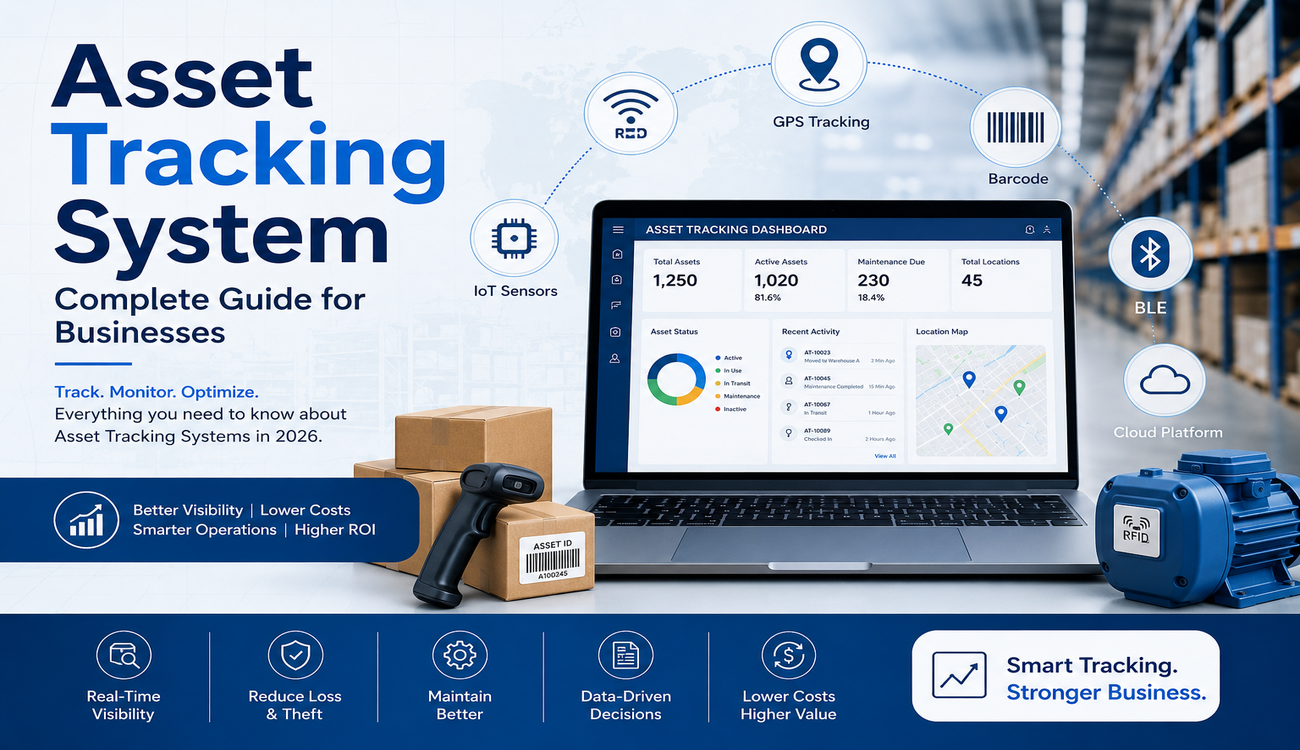
An Asset Tracking System provides businesses with a structured way to monitor and manage assets throughout their lifecycle. Using technologies such as RFID, barcodes, GPS, Bluetooth Low Energy (BLE), IoT sensors, and real-time location systems, organizations can improve asset visibility and maintain accurate information about their valuable resources. In 2026, asset tracking is becoming more intelligent as businesses combine tracking technologies with cloud platforms, automation, analytics, and AI-driven insights.
What Is an Asset Tracking System?
An Asset Tracking System is a technology-based solution that enables organizations to identify, monitor, locate, and manage physical assets throughout their lifecycle. Instead of depending entirely on spreadsheets, paper records, or manual inspections, businesses can use digital tracking systems to maintain centralized and continuously updated asset information.
The system generally connects an asset with a unique identifier, such as an RFID tag, barcode, GPS device, BLE beacon, or IoT sensor. The identifier allows the organization to associate the physical asset with digital information stored in an asset management platform. Depending on the technology used, businesses can track where an asset is located, who is using it, whether it requires maintenance, and how frequently it is being moved or utilized.
How Does an Asset Tracking System Work?
The working process begins when assets are registered in the tracking platform and assigned unique identification tags or devices. Information such as asset name, serial number, purchase date, department, location, owner, maintenance history, and current status can be stored within the system.
When an asset moves, is scanned, enters a specific location, or sends information through a connected sensor, the tracking platform updates the relevant record. Employees and managers can then access asset information through dashboards, web applications, or mobile interfaces.
More advanced systems can integrate tracking data with ERP, warehouse management, enterprise applications, and other business platforms. This creates a connected environment where asset information can support broader operational and financial processes.
Why Businesses Need an Asset Tracking System in 2026
The increasing complexity of business operations has made asset visibility more important than ever. Organizations may have thousands of assets distributed across multiple buildings, warehouses, branches, project sites, or geographic regions. Without reliable tracking, even basic questions such as where an asset is located or whether it is available can require significant manual effort.
An Asset Tracking System helps businesses reduce this uncertainty by creating a centralized source of asset information. Instead of searching through spreadsheets or contacting different departments, authorized employees can quickly access current asset records.
Improving Asset Visibility
Asset visibility is one of the most important advantages of modern tracking technology. Businesses can understand where assets are located and how they move between departments, facilities, or project locations.
This visibility is particularly valuable for organizations managing expensive equipment, vehicles, tools, machinery, medical devices, IT hardware, or inventory. Knowing the current status and location of these resources helps reduce unnecessary purchases and prevents assets from remaining unused or misplaced.
Reducing Asset Loss and Misplacement
Lost and misplaced assets can create significant financial and operational problems. Employees may spend hours searching for equipment, while businesses may purchase replacement assets even though the original equipment still exists somewhere within the organization.
An Asset Tracking System provides organizations with better control over asset movement. Depending on the tracking technology, businesses can receive information about asset location, movement, or unauthorized transfers, making it easier to identify potential losses and improve accountability.
Supporting Better Maintenance Management
Asset tracking is not limited to knowing where an asset is located. Modern systems can also help businesses monitor asset condition and maintenance requirements.
Organizations can record maintenance schedules, service history, inspection information, warranties, and repair records against individual assets. IoT-enabled tracking systems can go further by collecting operational data from connected equipment and identifying conditions that may indicate maintenance requirements.
Key Technologies Used in Asset Tracking
Different businesses have different tracking requirements, which means there is no single technology suitable for every environment. The choice depends on asset type, tracking range, infrastructure, accuracy requirements, operating environment, and budget.
RFID Asset Tracking
RFID uses radio-frequency technology to identify tagged assets without requiring direct line-of-sight scanning.
Businesses can use RFID readers at entry and exit points or within specific areas to automatically capture asset movements. This makes RFID particularly useful when organizations need to track large numbers of assets efficiently.
Barcode Asset Tracking
Barcode tracking is one of the most straightforward and cost-effective approaches to asset management. Each asset receives a unique barcode that can be scanned using handheld scanners or mobile devices.
Although barcode systems generally require scanning and have less automation than RFID or IoT-based solutions, they remain useful for businesses with straightforward asset tracking requirements and controlled operational environments.
GPS Asset Tracking
GPS tracking is particularly useful for mobile assets such as vehicles, heavy equipment, field-service equipment, and construction machinery. GPS-enabled devices can provide location information across large geographic areas.
Businesses can use GPS tracking to monitor fleet movement, identify asset locations, improve utilization, and support security operations.
BLE and IoT Asset Tracking
Bluetooth Low Energy can be used for indoor asset tracking where organizations need location information within buildings or defined areas. BLE beacons and tags can communicate with receivers or gateways to determine asset proximity and location.
IoT-based tracking can provide even more information by connecting assets with sensors that collect data such as temperature, movement, operating conditions, or environmental information. This can be particularly valuable for industrial equipment, healthcare assets, cold-chain operations, and sensitive equipment.
Benefits of an Asset Tracking System for Businesses
Implementing an Asset Tracking System can deliver benefits across different departments and business functions. The value extends beyond simply locating assets because accurate asset information can improve operational planning, financial control, maintenance, compliance, and resource utilization.
Better Asset Utilization
Businesses often have valuable equipment that remains unused for long periods while other departments purchase additional resources. A centralized tracking system provides visibility into asset availability and utilization.
Managers can identify underused assets and redistribute them where they are needed. This can help organizations maximize the value of existing investments before purchasing additional equipment.
Lower Operational Costs
Improved asset visibility can reduce costs associated with lost equipment, unnecessary purchases, inefficient maintenance, and manual tracking activities. Employees can spend less time searching for assets and more time performing productive operational tasks.
Over time, these improvements can contribute to a measurable reduction in asset-related expenses.
Accurate Asset Records
Maintaining accurate records is essential for organizations with large asset inventories. An Asset Tracking System can centralize information about asset ownership, location, status, acquisition, maintenance, and retirement.
This makes it easier for organizations to maintain reliable records and reduce discrepancies between physical assets and digital databases.
Improved Compliance and Auditing
Many industries need to maintain detailed records of equipment and assets for internal controls, regulatory requirements, audits, and safety procedures. A digital tracking platform creates a history of asset movements and activities that can support auditing and compliance processes.
Instead of reconstructing asset information manually, organizations can retrieve records from a centralized system.
How to Choose the Right Asset Tracking System
Selecting the right solution requires businesses to first understand their operational requirements. The system should be capable of handling the organization’s asset volume, locations, tracking accuracy requirements, and future growth.
Evaluate Tracking Requirements
Businesses should determine whether they need basic identification, location tracking, real-time visibility, condition monitoring, or a combination of these capabilities. A small office with a limited number of IT assets may require a different solution from a multinational manufacturing company managing thousands of machines.
The physical environment should also be considered because warehouses, hospitals, construction sites, factories, and outdoor facilities have different tracking challenges.
Consider Integration Capabilities
An effective Asset Tracking System should be able to work with the organization’s existing technology environment. Integration with ERP, CRM, warehouse management, finance, procurement, HR, or maintenance platforms can prevent isolated asset information and improve data consistency.
APIs and cloud-based integration capabilities can also make it easier to connect the tracking platform with future applications.
Focus on Scalability and Security
The solution should support future business growth rather than only current requirements. Organizations may add new facilities, assets, users, and tracking technologies over time.
Security is equally important because asset management platforms can contain valuable operational information. Access controls, authentication, data protection, activity monitoring, and appropriate user permissions should therefore be considered during system selection.
Asset Tracking Trends Businesses Should Watch in 2026
The Asset Tracking System market is moving toward more connected and intelligent solutions. Cloud platforms are becoming increasingly important because they allow organizations to access asset information across locations without depending entirely on local infrastructure.
AI and analytics are also changing how businesses use tracking data. Instead of simply displaying asset locations, intelligent systems can analyze historical information to identify utilization patterns, unusual movements, maintenance risks, and operational inefficiencies.
AI-Powered Asset Analytics
AI can help businesses convert asset tracking data into actionable insights. For example, historical usage patterns can help organizations identify assets that are consistently underutilized or determine when equipment may require attention.
This shift from basic tracking to intelligent asset management can help businesses make better decisions about procurement, maintenance, resource allocation, and asset replacement.
Real-Time Asset Visibility
Real-time tracking is becoming increasingly important in environments where asset location can directly affect operational performance. Warehouses, hospitals, manufacturing facilities, logistics operations, and large campuses can use real-time location technologies to improve visibility.
As IoT, RFID, BLE, GPS, and RTLS technologies continue to mature, businesses can build increasingly connected asset ecosystems.
Final Thoughts
An Asset Tracking System has become an important technology for businesses seeking better control over their physical resources in 2026. By replacing fragmented manual records with centralized and technology-enabled tracking, organizations can improve visibility, reduce losses, optimize asset utilization, simplify maintenance, and strengthen operational control.
The right solution depends on the organization’s asset types, operating environment, tracking requirements, integration needs, and future goals. Whether a business starts with barcode tracking or implements an advanced combination of RFID, GPS, BLE, IoT, RTLS, cloud platforms, and AI analytics, the objective remains the same: creating accurate and actionable visibility across the entire asset lifecycle.
Frequently Asked Questions (FAQs)
Q1. What is an Asset Tracking System?
An Asset Tracking System is a technology-based solution that helps businesses identify, monitor, locate, and manage physical assets throughout their lifecycle. It can use RFID, barcodes, GPS, BLE, IoT, or other tracking technologies.
Q2. What are the main benefits of an Asset Tracking System?
An Asset Tracking System helps businesses improve asset visibility, reduce asset loss, increase utilization, maintain accurate records, simplify maintenance management, reduce operational costs, and support auditing and compliance.
Q3. Which technologies are used for asset tracking?
Common asset tracking technologies include RFID, barcode, GPS, Bluetooth Low Energy (BLE), IoT sensors, and Real-Time Location Systems (RTLS). The right technology depends on the asset type, environment, tracking range, and business requirements.
Q4. How does an Asset Tracking System improve business operations?
An Asset Tracking System provides centralized and updated information about asset location, status, ownership, usage, and maintenance. This allows businesses to make faster decisions, reduce manual work, avoid unnecessary purchases, and improve resource utilization.
Q5. How should a business choose the right Asset Tracking System?
Businesses should evaluate their asset volume, tracking requirements, operating environment, integration needs, scalability, security, and budget. The selected system should support current requirements while providing flexibility for future expansion.